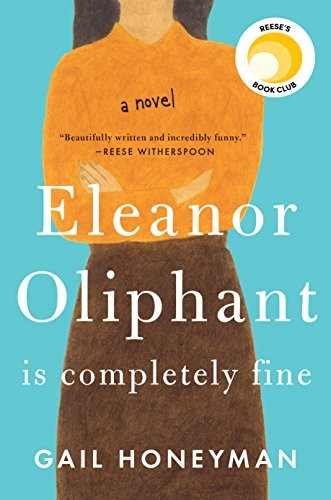
Talk to Eleanor Oliphant Is Completely Fine like its author wrote you back.
Get the ideas that fit your life — not generic summaries.
- Chat with the book
- Audiobook-style main ideas
- Adapts to your life and goals
- Helps you take action
Eleanor Oliphant Is Completely Fine, in detail
Eleanor Oliphant is twenty-nine years old, works in a Glasgow office doing data entry, and has not had a proper conversation with anyone outside of work in years. She eats the same meals on the same days, does not drink on weekdays, and is absolutely certain she is completely fine. She has significant scars on her face and arms, she speaks with an eccentric formality that alienates almost everyone, and she has a weekly phone call with her mother that is the most disturbing thing in the novel for reasons that take time to become clear.
The book is a character study masquerading as a feel-good novel, or perhaps the other way around. Eleanor's voice is funny and odd and frequently astute about the social conventions she refuses to perform, and the humor is real. But beneath it, Honeyman is working with severe childhood trauma, and as the novel progresses and Eleanor forms her first tentative friendships — with a coworker, with an old man they help in the street, with a therapist — the damage begins to surface. The book earns its ending rather than giving it away early.
The structural choice that sustains the novel is Eleanor's narrative unreliability. She tells us what she sees with great precision but misreads almost everything, including herself. She is an unreliable narrator not because she lies but because she genuinely cannot see certain things yet. As the reader understands more than Eleanor does, the gap between her cheerful self-assessment and the reality of her situation becomes the novel's engine.
Eleanor Oliphant was a debut bestseller in multiple countries and a Reese Witherspoon book club pick, which means it has a popular readership that sometimes resists literary analysis. It belongs to the "quirky female loner" subgenre, and its ending is conventional in ways that some readers find satisfying and others find neat. For readers who can hold the genuine emotional insight alongside the commercial shape, it is a book worth spending time with.
The big ideas
- 1.
Eleanor's cheerful certainty that she is fine is the novel's central irony — and also a very accurate portrait of how dissociation and repression actually work in people who have survived severe trauma.
- 2.
The voice is the achievement: funny, precise, socially oblivious in ways that are both comic and heartbreaking, and credible as the voice of someone who learned to think very carefully to survive a chaotic childhood.
- 3.
The novel treats loneliness as a structural problem, not a personal failing — Eleanor is isolated partly by her damage and partly by a culture that has no mechanisms for people who don't fit its social templates.
