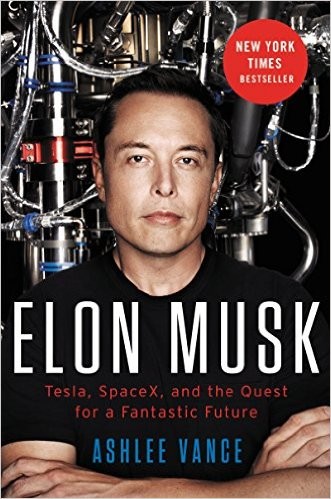
Talk to Elon Musk: Tesla, SpaceX, and the Quest for a Fantastic Future like its author wrote you back.
Get the ideas that fit your life — not generic summaries.
- Chat with the book
- Audiobook-style main ideas
- Adapts to your life and goals
- Helps you take action
Elon Musk: Tesla, SpaceX, and the Quest for a Fantastic Future, in detail
Ashlee Vance's biography of Elon Musk is the most comprehensive account of Musk's life and companies up to 2015, written with Musk's cooperation after an initial refusal and a long negotiation. The result is a portrait of a man who appears to function differently from most human beings — more willing to absorb personal and financial risk, more indifferent to others' comfort, and more genuinely convinced that the largest problems humanity faces (climate change, the multiplanetary future) are solvable by the right companies.
Vance traces Musk from his isolated, brutal childhood in apartheid-era South Africa, through his arrival in Canada with almost no money, through Zip2, PayPal, and into the twin bets on SpaceX and Tesla that nearly destroyed both companies and his entire personal fortune simultaneously in 2008. The 2008 near-collapse — SpaceX's first three rockets failed; Tesla was running out of cash; Musk was losing sleep and borrowing money from friends to make rent — is the dramatic center of the book. The double survival that followed shaped how Musk talks about risk and mission.
Vance is a fair but not uncritical observer. He documents the management style — brutal demands, public firings, contempt for the word "impossible" — and lets former employees describe the personal cost. The book doesn't excuse Musk's behavior toward subordinates, but it contextualizes it: this is someone who genuinely believes the work matters more than almost anything else, including other people's feelings.
The biography is strongest on the operational details of how SpaceX and Tesla actually built things others had declared impossible: reusable rockets, affordable electric vehicles, vertical integration that bypassed decades of automotive supplier relationships. It is weaker as psychological portrait — Musk remains somewhat opaque even after 340 pages, which may be accurate. Vance captures a man who is easier to study from the outside than to understand from within.
The big ideas
- 1.
Musk's approach to impossible problems starts with physics: what does the law of nature actually allow, and how far is the current cost from that theoretical minimum?
- 2.
SpaceX's survival in 2008, when three consecutive rocket failures nearly ended the company, was a function of having enough runway — financial and psychological — to absorb catastrophic setbacks.
- 3.
Vertical integration was SpaceX's competitive weapon. By building components that other aerospace companies outsourced, Musk could cut costs by orders of magnitude.
