Elon Musk: Tesla, SpaceX, and the Quest for a Fantastic Future by Ashlee Vance is a 2015 biography book about entrepreneurship, innovation, risk-taking. Musk's approach to impossible problems starts with physics: what does the law of nature actually allow, and how far is the current cost from that theoretical minimum?
Summary
Ashlee Vance's biography of Elon Musk is the most comprehensive account of Musk's life and companies up to 2015, written with Musk's cooperation after an initial refusal and a long negotiation. The result is a portrait of a man who appears to function differently from most human beings — more willing to absorb personal and financial risk, more indifferent to others' comfort, and more genuinely convinced that the largest problems humanity faces (climate change, the multiplanetary future) are solvable by the right companies.
Vance traces Musk from his isolated, brutal childhood in apartheid-era South Africa, through his arrival in Canada with almost no money, through Zip2, PayPal, and into the twin bets on SpaceX and Tesla that nearly destroyed both companies and his entire personal fortune simultaneously in 2008. The 2008 near-collapse — SpaceX's first three rockets failed; Tesla was running out of cash; Musk was losing sleep and borrowing money from friends to make rent — is the dramatic center of the book. The double survival that followed shaped how Musk talks about risk and mission.
Vance is a fair but not uncritical observer. He documents the management style — brutal demands, public firings, contempt for the word "impossible" — and lets former employees describe the personal cost. The book doesn't excuse Musk's behavior toward subordinates, but it contextualizes it: this is someone who genuinely believes the work matters more than almost anything else, including other people's feelings.
The biography is strongest on the operational details of how SpaceX and Tesla actually built things others had declared impossible: reusable rockets, affordable electric vehicles, vertical integration that bypassed decades of automotive supplier relationships. It is weaker as psychological portrait — Musk remains somewhat opaque even after 340 pages, which may be accurate. Vance captures a man who is easier to study from the outside than to understand from within.
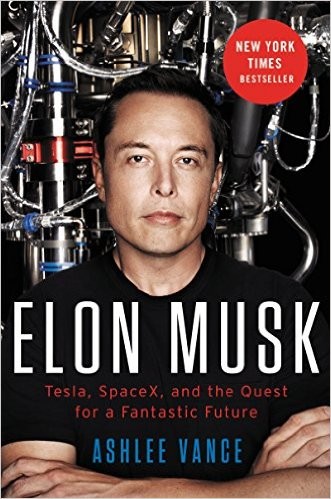
Talk to Elon Musk: Tesla, SpaceX, and the Quest for a Fantastic Future like its author wrote you back.
Get the ideas that fit your life — not generic summaries.
- Chat with the book
- Audiobook-style main ideas
- Adapts to your life and goals
- Helps you take action
Key takeaways
- 1.
Musk's approach to impossible problems starts with physics: what does the law of nature actually allow, and how far is the current cost from that theoretical minimum?
- 2.
SpaceX's survival in 2008, when three consecutive rocket failures nearly ended the company, was a function of having enough runway — financial and psychological — to absorb catastrophic setbacks.
- 3.
Vertical integration was SpaceX's competitive weapon. By building components that other aerospace companies outsourced, Musk could cut costs by orders of magnitude.
- 4.
Tesla's early survival depended on the Roadster proving the proposition that electric vehicles could be desirable, not just responsible — a lesson in sequencing product strategy.
- 5.
Musk's management style is demanding to the point of being destructive for many employees, but it creates organizations with unusually high tolerance for ambition and pace.
- 6.
The founding story of PayPal reveals a pattern: Musk is effective at large-scale strategic vision but has historically clashed with collaborators on control and execution detail.
- 7.
Musk's stated motivation — making humanity multiplanetary as insurance against extinction — is treated seriously by Vance, who finds it consistent with how Musk actually allocates his time and money.
- 8.
The 2008 financial crisis compressed a near-simultaneous crisis at both SpaceX and Tesla, forcing the kind of decision-making under extreme pressure that defines Musk's career arc.
Discussion questions
Use these on your own, with a book club, or as chat starters in Superbook. Book club version, ready to copy or print →
- 1.
Vance depicts Musk as someone who absorbs risk differently from most people. Is that a learned trait, a temperamental one, or some combination you can actually point to in the book?
- 2.
SpaceX succeeded partly because Musk was willing to fund it personally to the point of potential ruin. What does that suggest about how to evaluate which big risks are worth taking?
- 3.
The former employees Vance interviews describe both the best and the hardest working experiences of their careers. How do you weigh those two things against each other?
- 4.
Musk's childhood in South Africa was marked by social isolation and paternal cruelty. Vance suggests this shaped his indifference to others' distress. Does that explanation satisfy you?
- 5.
Tesla disrupted automotive manufacturing by going direct to consumer and ignoring dealer networks. What other industries have incumbent distribution relationships that similarly protect incumbents from challengers?
- 6.
Vance notes that Musk's physics-first approach to cost reduction — starting from the theoretical minimum — led to breakthroughs in rocket manufacturing. What equivalent questions would that approach surface in your field?
- 7.
By 2015 Musk had begun SolarCity and was running three companies simultaneously. Is that a strength, a risk, or evidence of something else?
- 8.
The book describes Musk treating 'it can't be done' as a failure of imagination rather than a fact. Where is that attitude genuinely useful, and where does it become a liability?
- 9.
How much of SpaceX's success was Musk's vision, and how much was assembling exactly the right people — Tom Mueller, Gwynne Shotwell — at the right moments?
- 10.
Vance describes Musk as genuinely believing in the multiplanetary mission. Does it matter whether that belief is sincere when evaluating him as a leader or a businessperson?
- 11.
The book was published in 2015. Which of Vance's predictions or assessments have aged well, and which look different now?
- 12.
Reading this, what's the single most transferable idea from Musk's approach to building companies that someone with far more modest resources and risk tolerance could actually apply?
Themes
Frequently asked questions
-
Is Elon Musk by Ashlee Vance worth reading?
Yes, especially for the operational detail on SpaceX and Tesla that Vance surfaces from hundreds of interviews. It's the most comprehensive account of Musk's early career and companies. The 2015 publication date means it covers only through the Model S era, but it holds up well as a historical document of how these companies actually got built.
-
How accurate is Vance's biography of Elon Musk?
Vance wrote it with Musk's participation after initial resistance, which gives it unusual access but also introduces some tension — Musk could review sections. Overall it's considered well-reported and fair, including on the difficult management style, though Musk later disputed some characterizations.
-
What is Elon Musk's management style according to the book?
Demanding, impatient, willing to fire people publicly for failing to meet standards, and prone to demanding the impossible on short timelines. Former employees describe it as brutal and inspiring simultaneously. Vance documents both sides without fully resolving the tension.
-
How does this book compare to Walter Isaacson's 2023 biography of Musk?
Vance's 2015 book covers the founding years and near-failures in more operational depth. Isaacson's later book covers the Twitter acquisition and more recent years. Vance is considered more journalistically rigorous; Isaacson had deeper personal access but a narrower time window for distance.
-
What's the most important idea in the book?
Probably the 2008 chapter, where both SpaceX and Tesla nearly collapsed simultaneously and Musk funded them personally to the edge of bankruptcy. It's the clearest illustration of how his risk tolerance actually functions — not as bravado but as a genuine calculation about what matters.