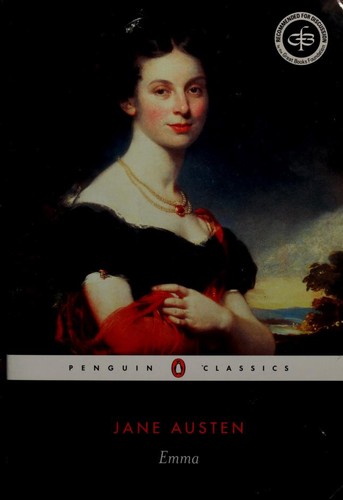
Talk to Emma like its author wrote you back.
Get the ideas that fit your life — not generic summaries.
- Chat with the book
- Audiobook-style main ideas
- Adapts to your life and goals
- Helps you take action
What it argues
Emma Woodhouse is handsome, clever, and rich, and she has been comfortable and a little bit wrong about things her entire life. Austen announces this on the first page — the famous opening is both a character sketch and a warning. Emma, twenty-one and convinced she has never been in love and never intends to be, takes up matchmaking as a hobby. Her first project is Harriet Smith, a pretty girl of unknown parentage whom Emma decides to improve by steering away from a farmer who actually suits her toward men who don't. Things go wrong in ways Emma doesn't notice until long after the reader does.
The novel's central subject is a specific kind of intelligence that fails because it has never been seriously tested. Emma is genuinely smart, but she has grown up with no one to challenge her — her father is amiable but dependent, her former governess was deferential, and the village of Highbury is too small and too comfortable to generate friction. So her mental agility turns inward and becomes something like fantasy. She invents romantic plots for people based on what she needs them to mean rather than who they are. The novel asks what it costs other people when a clever person refuses to be corrected, and what it costs Emma herself when reality arrives.
What it gets right
- 1.
Intelligence without self-awareness is not a virtue — the novel tracks exactly how Emma's cleverness makes her worse at the things she thinks she's good at.
- 2.
Free indirect discourse here reaches its peak: the reader inhabits Emma's perspective while seeing more clearly than she does, creating sustained dramatic irony.
- 3.
Class condescension is examined without mercy. Emma's cruelty to Miss Bates is not extreme — it's ordinary. That's the point.
What it covers
Who wrote it
Jane Austen (1775–1817) wrote six novels that collectively define ironic social realism in English fiction. Emma, published in 1815, is considered by many critics her most technically accomplished work. Austen worked in limited domestic settings — drawing rooms, country villages, letters — and from those settings produced one of the most precisely observed bodies of work in the language. She died at forty-one; her identity as author was not widely known during her lifetime.
