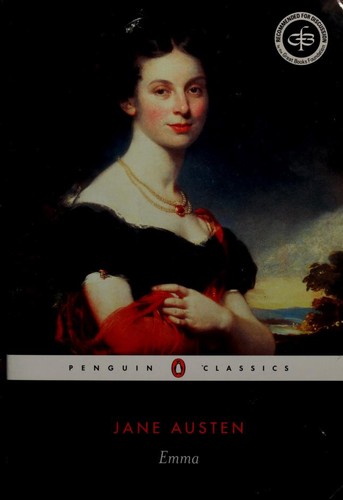
Emma by Jane Austen is a 1815 classics book about self-delusion and growth, class and condescension, female autonomy. Intelligence without self-awareness is not a virtue — the novel tracks exactly how Emma's cleverness makes her worse at the things she thinks she's good at.
Summary
Emma Woodhouse is handsome, clever, and rich, and she has been comfortable and a little bit wrong about things her entire life. Austen announces this on the first page — the famous opening is both a character sketch and a warning. Emma, twenty-one and convinced she has never been in love and never intends to be, takes up matchmaking as a hobby. Her first project is Harriet Smith, a pretty girl of unknown parentage whom Emma decides to improve by steering away from a farmer who actually suits her toward men who don't. Things go wrong in ways Emma doesn't notice until long after the reader does.
The novel's central subject is a specific kind of intelligence that fails because it has never been seriously tested. Emma is genuinely smart, but she has grown up with no one to challenge her — her father is amiable but dependent, her former governess was deferential, and the village of Highbury is too small and too comfortable to generate friction. So her mental agility turns inward and becomes something like fantasy. She invents romantic plots for people based on what she needs them to mean rather than who they are. The novel asks what it costs other people when a clever person refuses to be corrected, and what it costs Emma herself when reality arrives.
Austen deploys free indirect discourse here with more control than anywhere else in her work. We are inside Emma's perceptions almost entirely, which means we share her misreadings in real time. The dramatic irony is the point: we see what Emma can't, and watching her not-see it is both comic and uncomfortable. The novel's famous Box Hill picnic scene, where Emma says something genuinely cruel and registers only partial awareness of it, is a masterpiece of that technique.
Emma is the most intellectually demanding of Austen's novels, and also the most divisive. Its protagonist is not conventionally sympathetic — she is snobbish, managing, and often wrong. Some readers find this delightful; others find it insufferable. But if you can stay with Emma through her mistakes, the ending is genuinely moving in a way the other Austen novels aren't quite, because she has earned something by failing at it first.
Talk to Emma like its author wrote you back.
Get the ideas that fit your life — not generic summaries.
- Chat with the book
- Audiobook-style main ideas
- Adapts to your life and goals
- Helps you take action
Key takeaways
- 1.
Intelligence without self-awareness is not a virtue — the novel tracks exactly how Emma's cleverness makes her worse at the things she thinks she's good at.
- 2.
Free indirect discourse here reaches its peak: the reader inhabits Emma's perspective while seeing more clearly than she does, creating sustained dramatic irony.
- 3.
Class condescension is examined without mercy. Emma's cruelty to Miss Bates is not extreme — it's ordinary. That's the point.
- 4.
The novel is unusual in that almost all significant action is social — conversations, calls, letters, dinners. Austen uses this limitation to maximum effect.
- 5.
Mr. Knightley is the only character who consistently tells Emma the truth. The novel is partly about whether Emma can learn to hear it.
- 6.
Harriet Smith's arc is a study in what happens when a more powerful person treats a less powerful one as a project. Emma means well and does damage.
- 7.
Emma's resistance to romantic attachment for most of the novel isn't coolness — it's self-protection from an emotion she doesn't yet have vocabulary for.
- 8.
The community of Highbury is unusually fully realized for Austen. The village functions almost as a character, with its gossip, hierarchy, and mutual dependencies.
- 9.
The novel ends with three successful marriages, but only one of them — Emma and Knightley — feels like it required real change from both parties.
Discussion questions
Use these on your own, with a book club, or as chat starters in Superbook. Book club version, ready to copy or print →
- 1.
Austen said she wrote Emma to create a heroine that no one but herself would much like. Did you like Emma? Does the novel require you to?
- 2.
The Box Hill picnic — where Emma makes a pointed joke at Miss Bates's expense — is the novel's moral turning point. Why does that particular cruelty hit so hard?
- 3.
Mr. Knightley criticizes Emma throughout the novel. Is he always right? Does the novel ever show his blind spots, or is he the unironic moral center?
- 4.
Harriet's attachment to Robert Martin is real and well-matched. Emma tries to end it. How do you weigh Emma's intentions against the actual damage she causes?
- 5.
Emma misreads nearly every romantic situation in the novel. Does she learn, or does the resolution suggest she's just been re-aimed rather than genuinely changed?
- 6.
Miss Bates is poor, middle-aged, and talks too much. She is also genuinely kind and essentially good. How does the novel treat her, and what does that say about what Austen values?
- 7.
Frank Churchill is charming and dishonest for most of the novel. The revelation about his engagement is structurally convenient. Is he redeemed, or just let off lightly?
- 8.
Emma's father is anxious, demanding, and in some ways limits her life significantly. The novel treats him with affection. Does that feel right to you?
- 9.
The novel takes place almost entirely in one village. Is that claustrophobia a limitation, or does Austen use it to reveal something about how small communities work?
- 10.
Emma and Knightley's age difference (he's about sixteen years older) is not remarked on in the novel. Does that dynamic change how you read their relationship?
- 11.
Compare Emma's handling of Harriet to how people in your own experience use friendship as a form of self-expression or control. Is Emma's behavior unusual or recognizable?
- 12.
The novel closes with Emma choosing to stay in Highbury indefinitely to care for her father. Is that a constraint she accepts, a genuine preference, or something the novel doesn't fully resolve?
Themes
Frequently asked questions
-
Is Emma worth reading?
Yes, though it demands more patience than Pride and Prejudice. The payoff is substantial — the ironic technique is more controlled, the protagonist more complicated, and the emotional resolution more earned. But you have to be willing to spend 400 pages with someone who is often wrong.
-
Why is Emma considered Austen's masterpiece?
Because of the sustained free indirect discourse — the technique by which Austen inhabits Emma's perception and ironizes it simultaneously. It's a technically difficult thing to do across a novel of this length without breaking the spell or becoming repetitive. Austen doesn't drop it once.
-
Is Emma a difficult book to read?
Not linguistically. But it requires you to track dramatic irony — to hold Emma's interpretation of events and the correct interpretation simultaneously. Readers who miss that the protagonist is wrong about almost everything in the first half will find the second half confusing.
-
Who shouldn't read Emma?
Readers who need an immediately sympathetic protagonist. Emma is snobbish and managing for a long time. If that grates rather than intrigues, the novel won't click.
-
Are there adaptations of Emma?
Several. The 1996 film with Gwyneth Paltrow is pleasant but softens the edges. Clueless (1995) is a loose modern retelling set in Beverly Hills that captures Emma's obliviousness better than many straight adaptations. The 2020 film with Anya Taylor-Joy is visually stylized and closer to the novel's cold comedy.
Similar books
Pride and Prejudice
Jane Austen
Sense and Sensibility
Jane Austen
Emotional Intelligence
Daniel Goleman
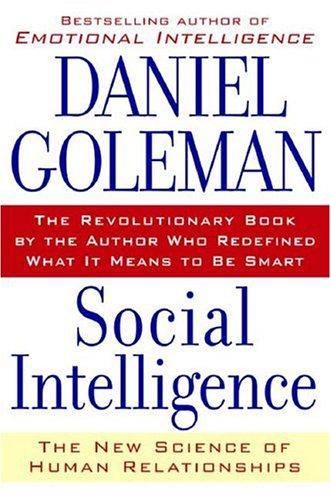
Social Intelligence: The New Science of Human Relationships
Daniel Goleman
