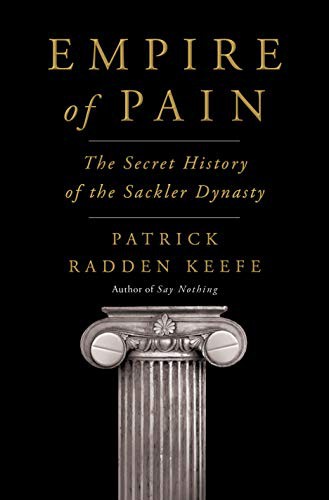
Talk to Empire of Pain: The Secret History of the Sackler Dynasty like its author wrote you back.
Get the ideas that fit your life — not generic summaries.
- Chat with the book
- Audiobook-style main ideas
- Adapts to your life and goals
- Helps you take action
Empire of Pain: The Secret History of the Sackler Dynasty, in detail
Empire of Pain is Patrick Radden Keefe's account of the Sackler family — the dynasty behind Purdue Pharma and the opioid crisis — told across three generations. Keefe is a staff writer at The New Yorker and a meticulous investigative reporter, and the book reads like a long-form criminal history rather than a polemic. The result is more disturbing for its restraint.
The first generation centers on Arthur Sackler, a psychiatrist and art collector who built his fortune in pharmaceutical advertising in the 1950s and 60s. Arthur helped pioneer the aggressive marketing of prescription drugs to doctors, essentially inventing the modern pharmaceutical sales model. He died before OxyContin was developed, but his template — sell the drug by selling the doctor — is the one Purdue would later use to catastrophic effect. Keefe treats Arthur with careful ambivalence: a genuinely brilliant and cultured man who also had a talent for self-serving rationalizations.
The second and third generations are darker. Purdue Pharma launched OxyContin in 1996 and marketed it as a breakthrough painkiller with limited addiction potential — a claim the company knew was at best misleading. Sales reps were sent to flood high-prescribing doctors with samples and speakers' fees. Pain became a "fifth vital sign." By the mid-2000s, addiction and overdose deaths were climbing sharply, and internal company documents showed awareness of the problem alongside deliberate efforts to suppress scrutiny. Keefe reconstructs the internal decision-making with enough granularity that the reader can watch individuals choose, repeatedly, to prioritize profit.
What makes the book unusual among corporate-malfeasance narratives is its attention to the Sackler family's philanthropic identity. Museums, universities, and galleries across the world carry the Sackler name — the Metropolitan Museum, the Smithsonian, the Tate Modern. The family cultivated a reputation for generosity while insulating members from direct legal exposure. Keefe asks what it means to launder a name through cultural institutions, and what institutions owe the public when they accept money from sources whose origins are contested. The legal settlements that eventually came — Purdue filed for bankruptcy in 2019, and the Sacklers paid billions — satisfied almost no one. Few family members faced personal criminal consequences. The book does not offer resolution, and that's accurate.
The big ideas
- 1.
Arthur Sackler invented the modern pharmaceutical marketing playbook: target prescribers, not patients, and use advertising to shape how doctors understand risk and benefit.
- 2.
Purdue Pharma's launch of OxyContin in 1996 relied on misleading claims about addiction risk. Internal documents show the company understood the danger and chose not to correct it.
- 3.
The opioid crisis was not accidental. It emerged from deliberate marketing decisions made by named individuals — decisions that were profitable and largely unpunished.
