Empire of Pain: The Secret History of the Sackler Dynasty by Patrick Radden Keefe is a 2021 history book about corporate greed, opioid crisis, philanthropy. Arthur Sackler invented the modern pharmaceutical marketing playbook: target prescribers, not patients, and use advertising to shape how doctors understand risk and benefit.
Summary
Empire of Pain is Patrick Radden Keefe's account of the Sackler family — the dynasty behind Purdue Pharma and the opioid crisis — told across three generations. Keefe is a staff writer at The New Yorker and a meticulous investigative reporter, and the book reads like a long-form criminal history rather than a polemic. The result is more disturbing for its restraint.
The first generation centers on Arthur Sackler, a psychiatrist and art collector who built his fortune in pharmaceutical advertising in the 1950s and 60s. Arthur helped pioneer the aggressive marketing of prescription drugs to doctors, essentially inventing the modern pharmaceutical sales model. He died before OxyContin was developed, but his template — sell the drug by selling the doctor — is the one Purdue would later use to catastrophic effect. Keefe treats Arthur with careful ambivalence: a genuinely brilliant and cultured man who also had a talent for self-serving rationalizations.
The second and third generations are darker. Purdue Pharma launched OxyContin in 1996 and marketed it as a breakthrough painkiller with limited addiction potential — a claim the company knew was at best misleading. Sales reps were sent to flood high-prescribing doctors with samples and speakers' fees. Pain became a "fifth vital sign." By the mid-2000s, addiction and overdose deaths were climbing sharply, and internal company documents showed awareness of the problem alongside deliberate efforts to suppress scrutiny. Keefe reconstructs the internal decision-making with enough granularity that the reader can watch individuals choose, repeatedly, to prioritize profit.
What makes the book unusual among corporate-malfeasance narratives is its attention to the Sackler family's philanthropic identity. Museums, universities, and galleries across the world carry the Sackler name — the Metropolitan Museum, the Smithsonian, the Tate Modern. The family cultivated a reputation for generosity while insulating members from direct legal exposure. Keefe asks what it means to launder a name through cultural institutions, and what institutions owe the public when they accept money from sources whose origins are contested. The legal settlements that eventually came — Purdue filed for bankruptcy in 2019, and the Sacklers paid billions — satisfied almost no one. Few family members faced personal criminal consequences. The book does not offer resolution, and that's accurate.
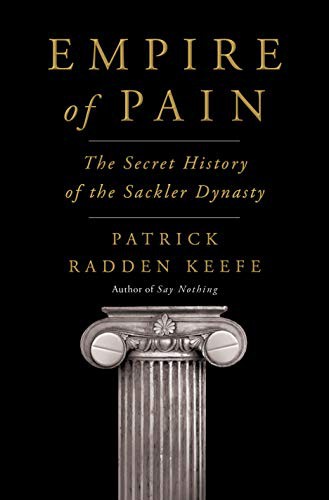
Talk to Empire of Pain: The Secret History of the Sackler Dynasty like its author wrote you back.
Get the ideas that fit your life — not generic summaries.
- Chat with the book
- Audiobook-style main ideas
- Adapts to your life and goals
- Helps you take action
Key takeaways
- 1.
Arthur Sackler invented the modern pharmaceutical marketing playbook: target prescribers, not patients, and use advertising to shape how doctors understand risk and benefit.
- 2.
Purdue Pharma's launch of OxyContin in 1996 relied on misleading claims about addiction risk. Internal documents show the company understood the danger and chose not to correct it.
- 3.
The opioid crisis was not accidental. It emerged from deliberate marketing decisions made by named individuals — decisions that were profitable and largely unpunished.
- 4.
The Sackler family structured its wealth and governance to insulate individuals from legal exposure, a strategy that largely succeeded despite paying billions in settlements.
- 5.
Philanthropic giving can serve as reputation laundering. The Sackler name on a museum wing is inseparable from the money that funded it and the harm that money came from.
- 6.
Purdue's success accelerated an industry-wide shift toward aggressive opioid prescribing. Competitors followed the model, deepening the crisis.
- 7.
The failure of accountability — prosecutors accepting settlements, individuals avoiding charges — reflects both the limits of existing law and the advantages of wealth in legal proceedings.
- 8.
Keefe traces how self-deception compounds over generations: each layer of the family found ways to believe they bore no responsibility for outcomes their decisions directly caused.
Discussion questions
Use these on your own, with a book club, or as chat starters in Superbook. Book club version, ready to copy or print →
- 1.
Keefe traces Arthur Sackler's marketing innovations as the root of what came later. Is it fair to hold him responsible for a crisis that emerged decades after his death?
- 2.
The company repeatedly used legal settlements to avoid admitting wrongdoing. What does that pattern reveal about how civil liability functions for wealthy institutions?
- 3.
Several Purdue executives knew the addiction data was being misrepresented. What would it have taken, realistically, for one of them to act differently?
- 4.
The Sackler name is on museums, universities, and galleries worldwide. Do institutions that accepted this money have an obligation to rename those spaces? Where do you draw the line?
- 5.
Keefe is careful not to turn Arthur Sackler into a monster. Does that restraint make the book more or less persuasive?
- 6.
The opioid crisis killed hundreds of thousands of people. No Sackler family member has been convicted of a crime. What does that gap between harm and accountability tell us?
- 7.
Purdue's salespeople were often young and had no idea of the scale of what they were selling. How do you think about individual culpability for people at the bottom of the chain?
- 8.
The family cultivated a philanthropic identity that was central to their sense of themselves as good people. How does philanthropy change — or fail to change — the moral weight of harm done?
- 9.
Keefe documents the role of consulting firms, lawyers, and lobbyists in helping Purdue manage its reputation and legal exposure. What responsibility do professional enablers bear?
- 10.
The bankruptcy settlement allowed the Sacklers to pay a large sum while retaining most of their wealth. Is that an acceptable outcome, or does it signal a failure of the legal system?
- 11.
Empire of Pain has been compared to investigative works on tobacco and financial fraud. What makes pharmaceutical harm distinctive as a policy and moral problem?
- 12.
If you were designing a pharmaceutical regulatory system from scratch after reading this book, what single change would you make first?
- 13.
The Sackler family members interviewed by Keefe consistently deflected responsibility onto doctors, patients, and regulators. Is that deflection entirely dishonest, or does it point to something real about distributed culpability?
Themes
Frequently asked questions
-
Is Empire of Pain worth reading?
Yes. It is one of the most thorough and well-sourced accounts of the opioid crisis available, and Keefe's narrative control keeps a complicated multi-generational story from becoming unwieldy. If you want to understand how a legal product caused a public-health catastrophe — and why so few people were held accountable — this is the clearest account.
-
How long does it take to read Empire of Pain?
About seven to eight hours at average reading pace. The book is long at around 500 pages, but the chapters are organized chronologically and each generation's section can be read as a standalone arc, which makes it work well across multiple sessions.
-
What is Empire of Pain about?
The Sackler family, the pharmaceutical company they controlled, and the opioid crisis. Keefe traces three generations — from Arthur Sackler's pharmaceutical marketing innovations in the 1950s through Purdue Pharma's launch of OxyContin and the resulting wave of addiction and death — while examining why accountability remained so limited.
-
Who should read Empire of Pain?
Anyone interested in corporate accountability, the American healthcare system, or how institutional harm unfolds across generations. It rewards readers drawn to investigative journalism, business history, and the intersection of wealth, law, and public health. It is not a policy book but leaves the policy questions unavoidable.
-
Did the Sacklers go to jail?
No. Purdue Pharma filed for bankruptcy in 2019, and the Sackler family agreed to pay roughly six billion dollars in civil settlements, but no family member has faced criminal conviction. Keefe examines how the family's legal and financial structuring helped insulate individuals from personal liability throughout.
Similar books
Bad Blood: Secrets and Lies in a Silicon Valley Startup
John Carreyrou

Killers of the Flower Moon
David Grann
The Big Short: Inside the Doomsday Machine
Michael Lewis
Say Nothing: A True Story of Murder and Memory in Northern Ireland
Patrick Radden Keefe
