Philosophy · Book club
Ethics book club questions
Here are 11 book club questions for Ethics by Baruch Spinoza, ordered to open easily and end somewhere worth arguing about. Copy them, print them, or bring them up one at a time.
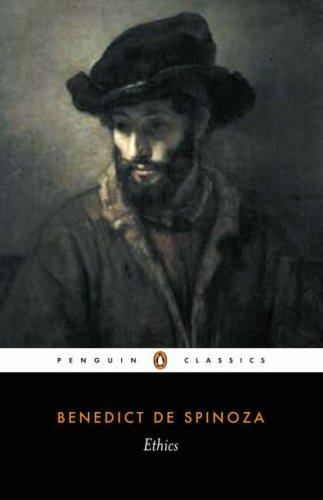
Spinoza's Ethics, published posthumously in 1677, is one of the most systematically ambitious works in Western philosophy.
Baruch Spinoza · 1677 · 6h 0m
Full summary and key takeaways →The 11 questions
- 1.
Spinoza writes in the geometric method — axioms, propositions, demonstrations. Does that form change how you receive the arguments compared to a discursive essay?
- 2.
If God and Nature are the same thing, in what sense can one be said to love God? Does the 'intellectual love of God' feel like a meaningful spiritual concept or a philosophical placeholder?
- 3.
Spinoza argues that free will, as usually understood, is an illusion produced by our ignorance of causes. What do you find most compelling or most troubling about that view?
- 4.
The claim that emotions are forms of confused thinking is psychologically striking. Can you identify an emotion you have whose character changed when you understood its cause more clearly?
- 5.
Spinoza says good and evil are not features of reality but projections of human desire. Does that claim seem true to you, or does it collapse a distinction that matters?
- 6.
The parallelism of mind and body — that they are two attributes of one substance — differs from both dualism and simple materialism. What is gained and lost with each view?
- 7.
Part V, on human freedom through knowledge, is often considered the weakest section. Do you find the conclusion that understanding the necessity of things produces peace convincing? Why or why not?
- 8.
Spinoza was excommunicated from his Jewish community at twenty-three for reasons that remain debated. Does knowing that biographical context affect how you read his arguments about God?
- 9.
The Ethics is one of the most demanding texts in philosophy. What parts of the argument, if any, struck you as illuminating despite the difficulty?
- 10.
How does Spinoza's account of emotional bondage compare to contemporary psychological or therapeutic frameworks about what emotions are and how to work with them?
- 11.
Spinoza argues that the wise person lives under the guidance of reason rather than hope or fear. Is that an admirable picture of human life, or does it leave out something important?
How to run the discussion
- Pick six to eight, not all of them. An hour of real discussion covers fewer questions than anyone expects, and racing the list is what makes a book club feel like homework.
- Open with what people noticed, not what they concluded. Asking for a verdict first hardens opinions before anyone has heard each other.
- Let the disagreement run. The questions below that split a room are the ones worth the time; the ones everyone answers the same way can be skipped.
- Ask the quiet person a specific question. A direct, narrow question is far easier to answer than an open invitation to contribute.
Themes worth steering toward
If the conversation stalls, these are the threads that usually restart it.
Common questions
What are good book club questions for Ethics?
Here are 11 book club questions for Ethics by Baruch Spinoza, ordered to open easily and end somewhere worth arguing about. The strongest openers ask what each reader noticed rather than what they concluded, and the discussion usually turns on god and nature, free will, emotions and reason.
How long should a book club discussion of Ethics last?
Most groups run 60 to 90 minutes of actual discussion. That is roughly six to eight questions, not all of them, so pick the ones that suit your group rather than working down the list in order.
What are the main themes in Ethics?
God and nature, Free will, Emotions and reason, Human freedom, Metaphysics. Those are the threads most likely to divide a room, which makes them the useful places to steer a discussion that has gone quiet.
Picking the next one? See books like Ethics or questions for other book club picks.
