Literary fiction · Book club
Fathers and Sons book club questions
Here are 12 book club questions for Fathers and Sons by Ivan Turgenev, ordered to open easily and end somewhere worth arguing about. Copy them, print them, or bring them up one at a time.
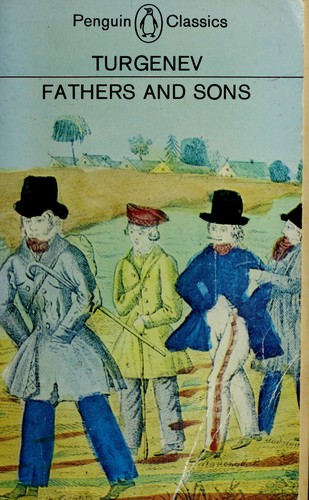
Fathers and Sons opens with a young medical student, Bazarov, arriving at a country estate alongside his friend Arkady.
Ivan Turgenev · 1862 · 5h 0m
Full summary and key takeaways →The 12 questions
- 1.
Bazarov insists he feels nothing for art, beauty, or sentiment. Do you believe him? Does Turgenev seem to believe him?
- 2.
When Bazarov falls in love, he treats it as a humiliation rather than a revelation. Is that response consistent with his philosophy, or a failure of it?
- 3.
Pavel Kirsanov is the novel's most openly antagonistic character toward Bazarov — but which of them does Turgenev seem to judge more harshly by the end?
- 4.
Arkady spends most of the novel in Bazarov's shadow, accepting his friend's worldview. What does his eventual break with Bazarov tell us about Arkady's real character?
- 5.
The novel was criticized from the left for mocking nihilism and from the right for glorifying it. Is it possible that both criticisms are correct?
- 6.
How much of the conflict between Bazarov and the older generation is actually about ideas, and how much is about status and the threat of displacement?
- 7.
Fenichka's role in the novel is relatively quiet, but she drives two pivotal scenes. What does Turgenev want us to understand about her?
- 8.
The duel between Bazarov and Pavel is a strange, almost farcical scene. What do you think Turgenev was doing with it?
- 9.
By the end of the novel, which character do you think has lived most honestly? Not most successfully — most honestly.
- 10.
Bazarov's relationship with his parents is the most emotionally unguarded part of the book. What does it reveal about him that he can't quite suppress?
- 11.
Turgenev said he 'shared Bazarov's views' on many things. Does that show in the text? Does it make the novel more or less interesting?
- 12.
If you were a young Russian radical reading this novel in 1862, what would you have found most offensive about it?
How to run the discussion
- Pick six to eight, not all of them. An hour of real discussion covers fewer questions than anyone expects, and racing the list is what makes a book club feel like homework.
- Open with what people noticed, not what they concluded. Asking for a verdict first hardens opinions before anyone has heard each other.
- Let the disagreement run. The questions below that split a room are the ones worth the time; the ones everyone answers the same way can be skipped.
- Ask the quiet person a specific question. A direct, narrow question is far easier to answer than an open invitation to contribute.
Themes worth steering toward
If the conversation stalls, these are the threads that usually restart it.
Common questions
What are good book club questions for Fathers and Sons?
Here are 12 book club questions for Fathers and Sons by Ivan Turgenev, ordered to open easily and end somewhere worth arguing about. The strongest openers ask what each reader noticed rather than what they concluded, and the discussion usually turns on generational conflict, nihilism, love and ideology.
How long should a book club discussion of Fathers and Sons last?
Most groups run 60 to 90 minutes of actual discussion. That is roughly six to eight questions, not all of them, so pick the ones that suit your group rather than working down the list in order.
What are the main themes in Fathers and Sons?
Generational conflict, Nihilism, Love and ideology, Class and change, Death and meaning. Those are the threads most likely to divide a room, which makes them the useful places to steer a discussion that has gone quiet.
Picking the next one? See books like Fathers and Sons or questions for other book club picks.
