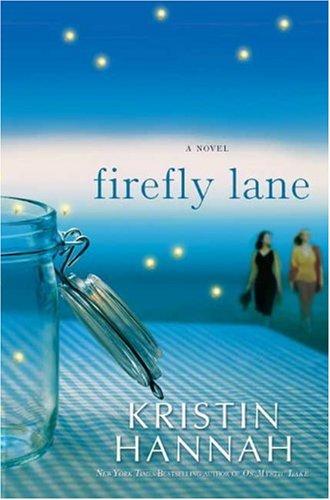
Talk to Firefly Lane like its author wrote you back.
Get the ideas that fit your life — not generic summaries.
- Chat with the book
- Audiobook-style main ideas
- Adapts to your life and goals
- Helps you take action
Firefly Lane, in detail
Tully Hart and Kate Mularkey meet in the summer of 1974 as fourteen-year-olds on Firefly Lane in rural Washington State, and their friendship spans three decades — through high school, college, careers in television journalism, marriages, and heartbreak. Tully is glamorous, driven, and emotionally defended; Kate is the quieter, steadier half of the pair. Hannah tracks how each woman becomes who she is, and how their friendship both holds and strains under the weight of the people they become.
The novel is working in an older and more durable tradition than Hannah's later books — the female friendship epic, somewhere between Beaches and Steel Magnolias — and it's comfortable in that tradition rather than struggling against it. The structure jumps between decades in a pattern that can frustrate readers who want linear narrative but rewards the kind of reader who enjoys watching two lives accumulate meaning backward and forward simultaneously. Hannah is particularly good at the 1970s and 1980s sections, which she renders with affectionate period detail.
Tully's ambition and its costs are the novel's most interesting thread. She becomes a national television personality, which in Hannah's treatment is a kind of wound as much as an achievement — she gets what she wanted and is less certain about wanting it than she expected. Kate's more conventional trajectory (marriage, children, suburban life) is treated with equal seriousness; Hannah is not in the business of ranking one life over another.
The ending takes the novel somewhere unexpected, and readers divide sharply on whether it earns its emotional payoff or whether it deploys tragedy as a shortcut to feeling. Either way, the final section is what most readers remember. Firefly Lane is not the most sophisticated novel Hannah has written — The Nightingale and The Great Alone are more ambitious — but it may be the one most readers will feel most.
The big ideas
- 1.
The novel argues that female friendship is a kind of love as demanding and as sustaining as any other, and that it deserves to be treated as central rather than peripheral in a woman's life story.
- 2.
Tully's success doesn't protect her. Fame and professional achievement are shown to be compatible with a persistent private loneliness — which Hannah renders honestly rather than moralistically.
- 3.
Kate's domestic choices are taken seriously. The novel doesn't frame marriage and children as default or failure; it frames them as chosen, with their own costs and rewards.
