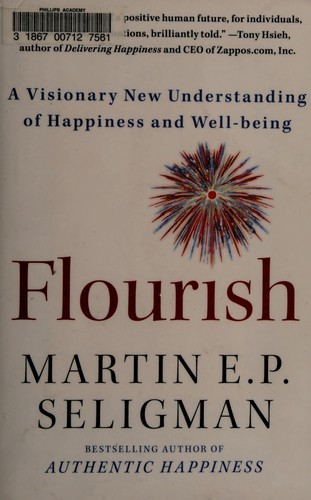
Talk to Flourish: A Visionary New Understanding of Happiness and Well-being like its author wrote you back.
Get the ideas that fit your life — not generic summaries.
- Chat with the book
- Audiobook-style main ideas
- Adapts to your life and goals
- Helps you take action
What it argues
Martin Seligman founded the positive psychology movement and published Authentic Happiness in 2002. Flourish, published in 2011, is his revision of that earlier framework, driven by his recognition that happiness — the single focus of Authentic Happiness — was too narrow. People want more than to feel good. They want to engage deeply, to achieve things that matter, to maintain relationships of genuine value, and to connect to something larger than themselves.
The new framework is called PERMA: Positive emotion, Engagement, Relationships, Meaning, and Accomplishment. These five elements are not instruments to happiness — they are ends in themselves. This is the key conceptual move from the earlier work. You do not engage in deep work because it makes you happy; you value engagement for its own sake. You do not maintain relationships because they boost your mood; you value them independently. The PERMA model describes what people pursue when they pursue a life that goes well, not just a life that feels good.
What it gets right
- 1.
PERMA: Positive emotion, Engagement, Relationships, Meaning, and Accomplishment are the five elements of well-being. Each is pursued for its own sake, not as a means to happiness.
- 2.
Happiness is necessary but insufficient for well-being. A good life requires engagement, relationships, meaning, and achievement in addition to positive emotion.
- 3.
Flourishing is a better goal than happiness because it is more complete and more honest about what people actually value when they reflect on their lives.
What it covers
Who wrote it
Martin E. P. Seligman is Zellerbach Family Professor of Psychology at the University of Pennsylvania and a former president of the American Psychological Association. He is the founder of positive psychology and the developer of learned helplessness theory, which he first proposed in the 1960s based on animal conditioning experiments. His books include Learned Optimism, Authentic Happiness, and The Optimistic Child. He has been consistently among the most cited psychologists in the world and has shaped both academic research and clinical practice across fifty years.
