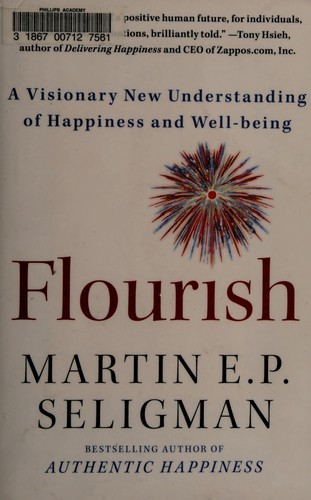
Talk to Flourish: A Visionary New Understanding of Happiness and Well-being like its author wrote you back.
Get the ideas that fit your life — not generic summaries.
- Chat with the book
- Audiobook-style main ideas
- Adapts to your life and goals
- Helps you take action
Flourish: A Visionary New Understanding of Happiness and Well-being, in detail
Martin Seligman founded the positive psychology movement and published Authentic Happiness in 2002. Flourish, published in 2011, is his revision of that earlier framework, driven by his recognition that happiness — the single focus of Authentic Happiness — was too narrow. People want more than to feel good. They want to engage deeply, to achieve things that matter, to maintain relationships of genuine value, and to connect to something larger than themselves.
The new framework is called PERMA: Positive emotion, Engagement, Relationships, Meaning, and Accomplishment. These five elements are not instruments to happiness — they are ends in themselves. This is the key conceptual move from the earlier work. You do not engage in deep work because it makes you happy; you value engagement for its own sake. You do not maintain relationships because they boost your mood; you value them independently. The PERMA model describes what people pursue when they pursue a life that goes well, not just a life that feels good.
Seligman applies the framework to education, therapy, the military, and broader social policy. The Comprehensive Soldier Fitness program, which he helped design for the US Army, is described at length — an attempt to apply positive psychology principles to resilience and mental health at scale. He also describes the Penn Resiliency Program in schools and argues that well-being should be a formal educational goal.
The book is part conceptual refinement, part memoir, and part policy argument. Seligman writes about his own evolution as a scientist and practitioner, his early work on learned helplessness, and his shift from a disorder-focused to a strength-focused psychology. His case for flourishing as a policy goal — not just economic growth or the absence of illness — is ambitious and argues for something like a science of the good life. The book is more programmatic than Authentic Happiness and less intimate than the earlier work, but it is the clearer statement of where positive psychology has landed.
The big ideas
- 1.
PERMA: Positive emotion, Engagement, Relationships, Meaning, and Accomplishment are the five elements of well-being. Each is pursued for its own sake, not as a means to happiness.
- 2.
Happiness is necessary but insufficient for well-being. A good life requires engagement, relationships, meaning, and achievement in addition to positive emotion.
- 3.
Flourishing is a better goal than happiness because it is more complete and more honest about what people actually value when they reflect on their lives.
