Talk to Flowers for Algernon like its author wrote you back.
Get the ideas that fit your life — not generic summaries.
- Chat with the book
- Audiobook-style main ideas
- Adapts to your life and goals
- Helps you take action
What it argues
Flowers for Algernon is narrated through progress reports written by Charlie Gordon, a 32-year-old man with an intellectual disability who becomes the first human subject in an experimental surgery designed to dramatically increase intelligence. The novel opens with Charlie's reports spelled phonetically and syntactically fractured — he is genuinely trying his best, and the warmth and effort in those early pages are devastating precisely because we know what's coming. The surgery works.
As Charlie's intelligence climbs past average, past genius, past anything previously recorded, the narrative transforms with him. The spelling corrects, the sentences lengthen, the references multiply. He reads voraciously, learns languages, contributes to academic journals, and begins to understand the world with a clarity that most people will never experience. And then he begins to understand himself: that the people he thought of as friends were laughing at him, that the scientists who treated him as a subject were not treating him as a person, that emotional intelligence and intellectual intelligence are different capabilities and he has gained only one.
What it gets right
- 1.
Charlie's arc from intellectual disability to genius and back is also an arc of emotional damage and partial repair — the surgery changes what he can know but not the wounds from how he was treated before and during the experiment.
- 2.
The progress-report format is a structural masterstroke: we watch a mind developing through the very medium of its development, and the form's degradation at the end is the most economical way Keyes could have represented decline.
- 3.
The scientists treat Charlie as a subject before and after, not as a person — and Charlie's growing intelligence allows him to see this clearly, which is among the most painful things the novel does.
What it covers
Who wrote it
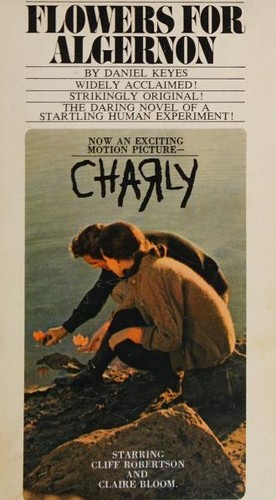
Daniel Keyes was an American author and university professor best known for Flowers for Algernon, which began as a short story in 1959 and won the Hugo Award before Keyes expanded it to novel form in 1966. The novel won the Nebula Award and has been continuously in print for six decades. It was adapted for film as Charly in 1968, which won Cliff Robertson an Academy Award for Best Actor. Keyes taught creative writing and English literature at Ohio University for many years. He died in 2014.
