Talk to Germinal like its author wrote you back.
Get the ideas that fit your life — not generic summaries.
- Chat with the book
- Audiobook-style main ideas
- Adapts to your life and goals
- Helps you take action
What it argues
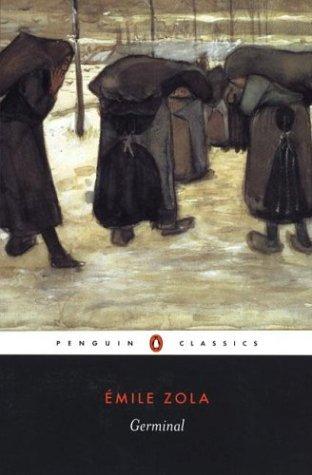
Germinal is the thirteenth novel in Zola's Rougon-Macquart series, and the one most readers consider his masterpiece. It follows Étienne Lantier, a young worker who arrives at a northern French coal mining community and, over the course of one terrible winter, becomes radicalized — organizing a strike that spirals into violence, starvation, and catastrophe. Published in 1885, it drew on Zola's own research visits to mining regions and became one of the foundational texts of labor literature worldwide.
The novel operates on two levels simultaneously. On the surface it is a plot-driven story of people in desperate circumstances making increasingly desperate choices. Underneath it is a naturalist study of an entire community understood as an organism — the mine itself is often described in terms that make it sound like a living thing, breathing, eating, consuming the people who feed it. Zola's research shows in the specificity of the conditions: the darkness, the gas, the physical degradation, the diet, the way the company store keeps workers permanently indebted. This is not background color; it is the argument. The system is designed this way, Zola says, and individual choice has almost nothing to do with how it ends.
What it gets right
- 1.
Zola's naturalist method treats the mining community as an ecosystem rather than a collection of individuals — heredity, environment, and economic structure are the real protagonists.
- 2.
The mine in the novel is rendered almost as a living predator: breathing, groaning, consuming workers across generations. This isn't metaphor but a precise description of what extraction looks like from below.
- 3.
Étienne's radicalization is portrayed with sympathy but not without critique — Zola shows how ideology can become a form of self-aggrandizement even in people with genuine grievances.
What it covers
Who wrote it
Émile Zola (1840–1902) was a French novelist, journalist, and political activist, and the leading figure of the Naturalist movement in literature. He wrote the twenty-novel Rougon-Macquart series over more than two decades, tracing the effects of heredity and environment through two branches of a single family across Second Empire and Third Republic France. Germinal (1885) is widely considered his masterwork. His 1898 open letter J'Accuse, defending Alfred Dreyfus against a fabricated treason charge, is one of the most famous acts of political journalism in history. He died of carbon monoxide poisoning in 1902 in circumstances that have never been fully explained.
