Talk to Good Calories, Bad Calories like its author wrote you back.
Get the ideas that fit your life — not generic summaries.
- Chat with the book
- Audiobook-style main ideas
- Adapts to your life and goals
- Helps you take action
What it argues
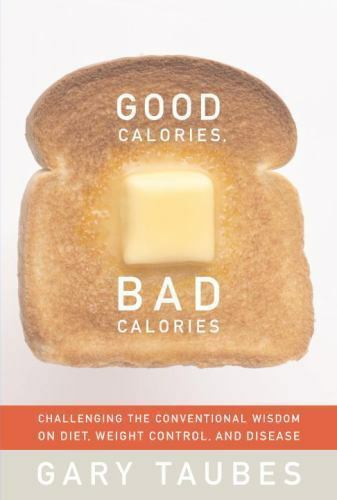
Good Calories, Bad Calories is Gary Taubes's five-hundred-page argument that the conventional wisdom on diet and weight — specifically the idea that fat makes you fat and that eating less while exercising more is the path to weight loss — is not only wrong but has been maintained in the face of decades of contradictory evidence. Taubes is a science journalist who has covered physics, medicine, and nutrition, and the book applies the rigor of a science journalist to a field he argues has been unusually resistant to revising its foundational assumptions.
The book's central thesis is the carbohydrate-insulin hypothesis of obesity: that refined carbohydrates and sugar elevate insulin, insulin directs fat cells to store rather than release energy, and the resulting energy deficit in the rest of the body drives hunger and inactivity rather than the other way around. On this model, the fundamental cause of obesity and the chronic diseases associated with it is not caloric excess but carbohydrate quality. Fat is rehabilitated; sugar and refined grains are indicted.
What it gets right
- 1.
The carbohydrate-insulin hypothesis proposes that refined carbohydrates and sugar — not dietary fat or total calories — are the primary drivers of obesity and metabolic disease.
- 2.
Insulin regulates fat storage: when insulin is elevated by refined carbohydrate consumption, fat cells preferentially store energy, creating a deficit that drives hunger independent of how much has been eaten.
- 3.
The lipid hypothesis — that dietary fat causes heart disease — was promoted by Ancel Keys based on data that was selectively chosen and vigorously defended against contradictory evidence.
What it covers
Who wrote it
Gary Taubes is an American science journalist and author who has written extensively about physics, medicine, and nutrition. He holds a physics degree from Harvard, a master's in aerospace engineering from Stanford, and a journalism degree from Columbia. He has contributed to Science, The Atlantic, and the New York Times Magazine, and has received the Science in Society Award from the National Association of Science Writers three times. His other books include Why We Get Fat, The Case Against Sugar, and The Case for Keto. Good Calories, Bad Calories, published in 2007, is considered a landmark work in the debate about low-carbohydrate diets.
