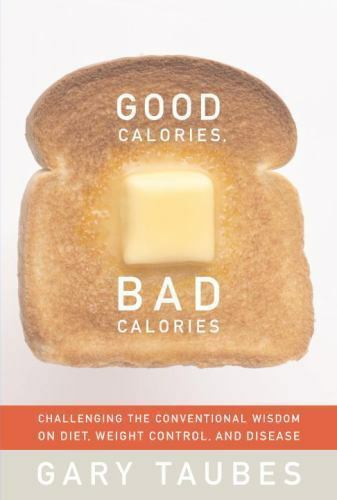
Talk to Good Calories, Bad Calories like its author wrote you back.
Get the ideas that fit your life — not generic summaries.
- Chat with the book
- Audiobook-style main ideas
- Adapts to your life and goals
- Helps you take action
Good Calories, Bad Calories, in detail
Good Calories, Bad Calories is Gary Taubes's five-hundred-page argument that the conventional wisdom on diet and weight — specifically the idea that fat makes you fat and that eating less while exercising more is the path to weight loss — is not only wrong but has been maintained in the face of decades of contradictory evidence. Taubes is a science journalist who has covered physics, medicine, and nutrition, and the book applies the rigor of a science journalist to a field he argues has been unusually resistant to revising its foundational assumptions.
The book's central thesis is the carbohydrate-insulin hypothesis of obesity: that refined carbohydrates and sugar elevate insulin, insulin directs fat cells to store rather than release energy, and the resulting energy deficit in the rest of the body drives hunger and inactivity rather than the other way around. On this model, the fundamental cause of obesity and the chronic diseases associated with it is not caloric excess but carbohydrate quality. Fat is rehabilitated; sugar and refined grains are indicted.
Taubes spends much of the book in the history of nutritional science, tracing how the lipid hypothesis — that dietary fat causes heart disease — came to dominate medical thinking in the 1950s and 60s through Ancel Keys's advocacy and became entrenched despite weak and contested evidence. He argues that science sociology explains much of the nutritional consensus: careers, institutions, and regulatory agencies were built on the fat hypothesis, making revision enormously costly even as evidence accumulated against it.
The book is demanding. It covers decades of research in detail, often going further into methodology and institutional history than popular science books typically venture. Critics note that Taubes is selective in his own evidence presentation — the carbohydrate-insulin hypothesis has since been tested directly in controlled trials and the results have been more modest than his thesis implies. But the historical critique — that the fat hypothesis was adopted prematurely and defended too confidently — has held up better. The book's core contribution is not a settled answer to the diet question but a compelling account of how nutritional science went wrong.
The big ideas
- 1.
The carbohydrate-insulin hypothesis proposes that refined carbohydrates and sugar — not dietary fat or total calories — are the primary drivers of obesity and metabolic disease.
- 2.
Insulin regulates fat storage: when insulin is elevated by refined carbohydrate consumption, fat cells preferentially store energy, creating a deficit that drives hunger independent of how much has been eaten.
- 3.
The lipid hypothesis — that dietary fat causes heart disease — was promoted by Ancel Keys based on data that was selectively chosen and vigorously defended against contradictory evidence.
