Classics · Book club
Great Expectations book club questions
Here are 12 book club questions for Great Expectations by Charles Dickens, ordered to open easily and end somewhere worth arguing about. Copy them, print them, or bring them up one at a time.
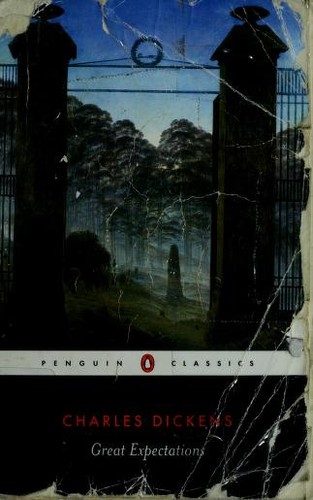
Great Expectations follows Pip, an orphan boy on the Kent marshes who is yanked from modest obscurity into the orbit of wealth and social aspiration when an anonymous benefactor funds his move to London.
Charles Dickens · 1861 · 12h 15m
Full summary and key takeaways →The 12 questions
- 1.
Pip is ashamed of Joe throughout most of the novel — but the novel never is. How does Dickens signal this gap between Pip's view and the reader's without making Pip unlikable?
- 2.
Miss Havisham says she raised Estella to be loved. Is she self-deceived, or does she genuinely believe this? How does the novel judge her?
- 3.
The original ending versus the revised ending: which do you prefer, and does your preference say something about what you think the book is actually about?
- 4.
Jaggers, the lawyer who manages both Miss Havisham's and Magwitch's affairs, is fastidiously honest while enabling harm at every turn. Is he a moral actor in the novel?
- 5.
Pip's great expectations ruin him for a while — but does he emerge better or simply more aware of his own smallness? Is that enough for Dickens?
- 6.
Herbert Pocket achieves more through modest steady effort than Pip does through windfall wealth. Is this a deliberate argument or coincidence?
- 7.
Dickens wrote this during serial publication and adjusted the plot to reader response. Does Great Expectations feel like a constructed novel or a discovered one?
- 8.
Magwitch sees Pip as the gentleman he could never be and takes vicarious pride in financing the life. Is there something troubling in that relationship, or is it touching?
- 9.
Estella insists she was made, not born, incapable of love. Do you believe her? Does the novel believe her?
- 10.
The novel's class critique is pointed but Dickens himself was obsessed with respectability. Does that contradiction show up in the text?
- 11.
Compare Pip's story of social mobility to a modern version. What's changed and what hasn't?
- 12.
The marshes, the forge, Miss Havisham's frozen house, and London each represent different moral registers in the novel. How does physical setting do moral work here?
How to run the discussion
- Pick six to eight, not all of them. An hour of real discussion covers fewer questions than anyone expects, and racing the list is what makes a book club feel like homework.
- Open with what people noticed, not what they concluded. Asking for a verdict first hardens opinions before anyone has heard each other.
- Let the disagreement run. The questions below that split a room are the ones worth the time; the ones everyone answers the same way can be skipped.
- Ask the quiet person a specific question. A direct, narrow question is far easier to answer than an open invitation to contribute.
Themes worth steering toward
If the conversation stalls, these are the threads that usually restart it.
Common questions
What are good book club questions for Great Expectations?
Here are 12 book club questions for Great Expectations by Charles Dickens, ordered to open easily and end somewhere worth arguing about. The strongest openers ask what each reader noticed rather than what they concluded, and the discussion usually turns on class and ambition, identity and self-deception, guilt and redemption.
How long should a book club discussion of Great Expectations last?
Most groups run 60 to 90 minutes of actual discussion. That is roughly six to eight questions, not all of them, so pick the ones that suit your group rather than working down the list in order.
What are the main themes in Great Expectations?
Class and ambition, Identity and self-deception, Guilt and redemption, Loyalty and betrayal, Love and obsession. Those are the threads most likely to divide a room, which makes them the useful places to steer a discussion that has gone quiet.
Picking the next one? See books like Great Expectations or questions for other book club picks.
