Philosophy · Book club
Grid Systems in Graphic Design book club questions
Here are 11 book club questions for Grid Systems in Graphic Design by Josef Müller-Brockmann, ordered to open easily and end somewhere worth arguing about. Copy them, print them, or bring them up one at a time.
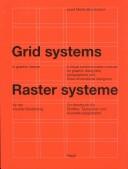
Josef Müller-Brockmann's Grid Systems in Graphic Design, first published in German and English in 1981 by Niggli Verlag, is the closest thing graphic design has to a foundational technical text.
Josef Müller-Brockmann · 1981 · 2h 45m
Full summary and key takeaways →The 11 questions
- 1.
Müller-Brockmann treats the grid as a neutral, rational tool. Is that possible? Can a design system be value-free, or does every system embed assumptions about what matters?
- 2.
He argues that clear organization is an ethical position. Do you agree? Can deliberate visual complexity or disorder ever be more honest than clarity?
- 3.
The Swiss International Style was criticized for producing cold, corporate aesthetics. Looking at work produced under its principles, do you find that criticism fair?
- 4.
Grid Systems is a technical manual with almost no mention of clients, audiences, or commercial constraints. What does that omission reveal about how Müller-Brockmann understood the designer's role?
- 5.
Digital design tools make grid construction instantaneous and invisible. Has that changed the way designers understand and use grids — for better or worse?
- 6.
The book was written before responsive web design, touch interfaces, and variable screen sizes. How well do the principles translate? What needs updating?
- 7.
He treats multi-page layouts and exhibition design with the same framework as single-page print design. Is that generalization productive, or does it gloss over meaningful differences?
- 8.
Contemporary graphic design is often explicitly personality-driven and expressive — the opposite of what this book advocates. Is that a correction, a swing of the pendulum, or a genuine advance?
- 9.
If you've used grids in your own work — in design, writing, or presentation — where have they helped and where have they felt like restrictions?
- 10.
Müller-Brockmann was a practitioner who theorized his practice. How does the origin of this book in daily professional work affect how you read it compared to purely academic design theory?
- 11.
The book barely mentions color. Is that a significant omission, or is the separation of structure and color a feature of the argument?
How to run the discussion
- Pick six to eight, not all of them. An hour of real discussion covers fewer questions than anyone expects, and racing the list is what makes a book club feel like homework.
- Open with what people noticed, not what they concluded. Asking for a verdict first hardens opinions before anyone has heard each other.
- Let the disagreement run. The questions below that split a room are the ones worth the time; the ones everyone answers the same way can be skipped.
- Ask the quiet person a specific question. A direct, narrow question is far easier to answer than an open invitation to contribute.
Themes worth steering toward
If the conversation stalls, these are the threads that usually restart it.
Common questions
What are good book club questions for Grid Systems in Graphic Design?
Here are 11 book club questions for Grid Systems in Graphic Design by Josef Müller-Brockmann, ordered to open easily and end somewhere worth arguing about. The strongest openers ask what each reader noticed rather than what they concluded, and the discussion usually turns on typography, layout and composition, design systems.
How long should a book club discussion of Grid Systems in Graphic Design last?
Most groups run 60 to 90 minutes of actual discussion. That is roughly six to eight questions, not all of them, so pick the ones that suit your group rather than working down the list in order.
What are the main themes in Grid Systems in Graphic Design?
Typography, Layout and composition, Design systems, Visual communication, Swiss design. Those are the threads most likely to divide a room, which makes them the useful places to steer a discussion that has gone quiet.
Picking the next one? See books like Grid Systems in Graphic Design or questions for other book club picks.
