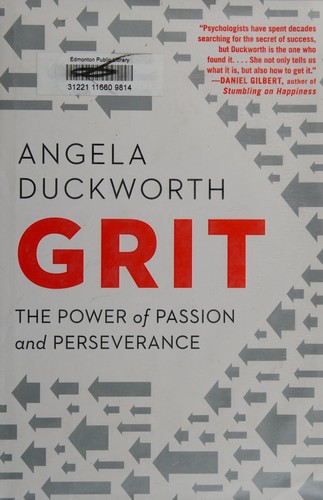
Talk to Grit: The Power of Passion and Perseverance like its author wrote you back.
Get the ideas that fit your life — not generic summaries.
- Chat with the book
- Audiobook-style main ideas
- Adapts to your life and goals
- Helps you take action
What it argues
Duckworth's central claim is that talent is overrated. In study after study -- West Point cadets, National Spelling Bee finalists, rookie teachers in high-poverty schools, sales representatives, and cadets at the military academy -- the predictor of who finished and who excelled was not IQ, physical ability, or natural gift. It was grit: the combination of passion and perseverance for long-term goals. Grit means working hard not just for a week but for years, staying the course when progress is slow or invisible, and caring enough about the goal that setbacks don't permanently knock you off course. Duckworth coined the concept during a teaching career in which she noticed that her most talented students were not always her best performers.
Duckworth builds grit as a two-part construct. Passion, in her formulation, is not the electric excitement people feel about a new hobby. It is the quiet, durable commitment to a top-level goal that organizes everything else. Perseverance is the habit of returning to the work after failure, boredom, or discouragement. She presents a four-level hierarchy of goals, from small daily tasks up to a single animating purpose, and argues that gritty people have unusual clarity about where they're headed. The book draws on her own research, interviews with high achievers in sports, business, education, and the military, and on foundational ideas from William James and pioneering psychologist Francis Galton. Her core research instrument, the Grit Scale -- a ten-item questionnaire separating passion scores from perseverance scores -- is included so readers can benchmark themselves.
What it gets right
- 1.
Grit -- the combination of passion and perseverance for long-term goals -- predicts achievement better than talent or IQ across competitive, demanding fields.
- 2.
Passion, in Duckworth's definition, is not excitement or enthusiasm for novelty. It is durable commitment to a single top-level goal that stays stable for years.
- 3.
Deliberate practice is central to grit: not just putting in hours but working at the edge of current ability, getting feedback, and correcting errors deliberately.
What it covers
Who wrote it
Angela Duckworth is a psychologist and professor at the University of Pennsylvania, where she studies self-control, grit, and achievement. She founded the Character Lab, a nonprofit that advances research on character development in children. Before her academic career she worked as a management consultant and middle school math teacher -- experiences that shaped her central question: why do some people succeed despite modest talent while others with high ability stall? Her 2013 TED Talk on grit has been viewed over 25 million times. Grit, published in 2016, is her first book.
