Talk to Gut like its author wrote you back.
Get the ideas that fit your life — not generic summaries.
- Chat with the book
- Audiobook-style main ideas
- Adapts to your life and goals
- Helps you take action
Gut, in detail
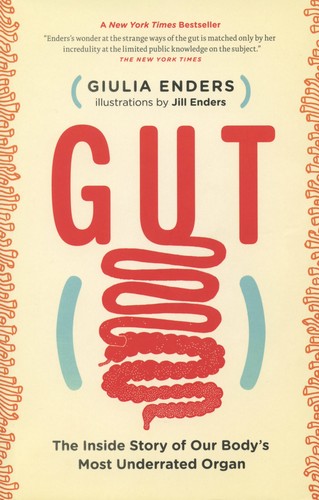
Giulia Enders wrote Gut while studying medicine, and the book shows: it is both scientifically informed and written with an enthusiasm that has clearly not yet been worn down by clinical routine. The subject is digestion — how food moves through the body, what the gut actually does, and why the thirty feet of tubing we carry around deserve more attention than they typically get.
Enders covers the mechanics of digestion in satisfying detail: the two-sphincter system, the enteric nervous system (the "second brain" that allows the gut to operate largely independently of the central nervous system), and the complex orchestration of hormones, nerves, and bacteria that govern how nutrients are absorbed and waste is expelled. She is particularly good at defamiliarizing things the reader thinks they understand — explaining, for instance, why constipation and diarrhea are not opposite problems requiring opposite solutions, or why the angle at which one sits on a toilet actually matters.
The second half of the book turns to the microbiome. Enders explains what is known and unknown about the trillions of bacteria in the gut, their relationship to immune function, mental health, and weight. She is careful here not to overstate — she distinguishes well-established findings from early-stage research — though the field has moved quickly enough that some sections now feel dated. The gut-brain axis, meaning the bidirectional communication between gut bacteria and brain chemistry, is given real attention and presented honestly as a developing area rather than settled science.
The book works best as a popularization: approachable, occasionally funny, and more rigorous than most gut-health content that reaches general audiences. Readers who come to it hoping for a specific protocol or dietary intervention will not find one. What they will find is a thorough and engagingly written explanation of why the gut is interesting, and a foundation for evaluating the often-breathless health claims that have surrounded microbiome science in recent years.
The big ideas
- 1.
The gut has its own nervous system — the enteric nervous system — with more nerve cells than the spinal cord. It communicates with the brain bidirectionally, which helps explain why gut health and mental health are linked.
- 2.
The microbiome is individual: the specific community of bacteria in your gut is shaped by your birth, early diet, antibiotic history, and environment, and no two people's are the same.
- 3.
Digestion begins in the mouth and is far more chemically complex than the simple acid-bath story taught in school. Different sections of the gut specialize in different phases of the process.
