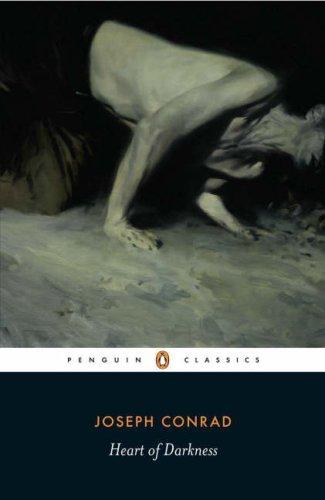
Talk to Heart of Darkness like its author wrote you back.
Get the ideas that fit your life — not generic summaries.
- Chat with the book
- Audiobook-style main ideas
- Adapts to your life and goals
- Helps you take action
Heart of Darkness, in detail
Marlow, a sailor sitting on a boat on the Thames, tells the story of a journey he made up the Congo River to find Kurtz, a brilliant company agent who has gone silent deep in the interior. The company that employs Marlow extracts ivory from central Africa. What Marlow finds at the end of his journey is a man who has gone beyond the rules — worshipped, surrounded by severed heads on poles, whispering about "the horror."
Conrad was writing from his own experience: he navigated the Congo in 1890 and what he saw broke something in him permanently. The novella is not, however, primarily a journalistic account of colonial atrocities. It is something more uncomfortable — a meditation on what happens when the idea of civilization is stripped away, and on what the narrator, who is not Kurtz, is willing to see and say. Marlow is implicated in the system he is describing. He works for the company. He reports to its bureaucracy. He is part of the machine even as he registers his disgust.
The book became the center of a major literary-political controversy when Chinua Achebe argued in 1975 that Conrad was himself a "thoroughgoing racist" who used Africa as a backdrop for European psychodrama while denying Africans their humanity. That critique has not been refuted; it has changed the way the novella is taught and read. It is now impossible — and dishonest — to read Heart of Darkness as simply a critique of colonialism. It both critiques colonialism and reproduces some of its worst assumptions. That double quality is, depending on your view, either a damning flaw or an honest demonstration of how deeply the ideology it claims to oppose is embedded in its narrator.
At under 40,000 words it can be read in an afternoon, but it is extremely dense. The prose is not difficult; it is deliberately murky, hedged, repetitive in a way that enacts the difficulty of seeing clearly. The questions it leaves open are real questions. Readers who engage with the critical conversation around it — particularly Achebe's essay — will find it considerably more complex than a classroom summary would suggest.
The big ideas
- 1.
Marlow is not simply an observer of colonialism — he is an employee of the colonial system, and the novella's moral weight depends on taking that seriously.
- 2.
Kurtz represents one extreme: a man who dropped the pretense of civilization and followed his impulses to their end. But Conrad does not clearly offer a better alternative.
- 3.
Achebe's 1975 critique — that Conrad used Africa as a backdrop and African characters as props — is accurate and cannot simply be dismissed as ahistorical.
