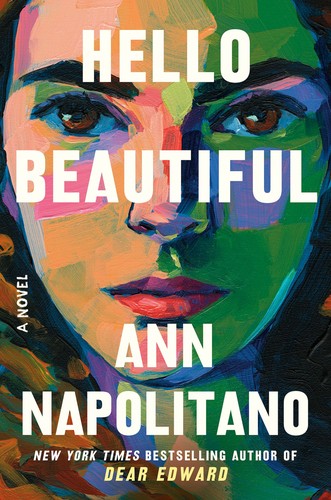
Talk to Hello Beautiful like its author wrote you back.
Get the ideas that fit your life — not generic summaries.
- Chat with the book
- Audiobook-style main ideas
- Adapts to your life and goals
- Helps you take action
Hello Beautiful, in detail
Hello Beautiful follows four generations of the Padavano family, beginning in Chicago in the 1920s and ending in the early 2000s. The novel opens with William Waters, a young man so damaged by his own childhood — a dead infant sister his mother never recovered from — that he cannot love his daughter Julia, who grows up to become the matriarch of the family the novel is really about. Julia's daughters, and their daughters, carry the weight of William's failure forward across eighty years. It is a novel about what gets passed down that no one chooses to pass down.
The novel won the Pulitzer Prize for Fiction in 2023, and the scope justifies the distinction. Napolitano is writing in the tradition of the multigenerational American family novel — Updike, Eugenides, Franzen — but her interest is specifically in what happens to the women. The four Padavano sisters are the center of the book's middle section: Julia, the eldest, fierce and frightened; Cecelia, the artist; Emeline, the nurturer; Sylvie, the reader and dreamer. Their lives interweave across decades, pulling apart and returning, and their individual choices ripple across generations in ways none of them fully see.
Napolitano writes with clarity and emotional directness that avoids sentimentality through rigorous attention to consequence. The novel does not ask you to forgive its characters; it asks you to understand how they became capable of what they did. The Chicago setting — the neighborhoods, the Catholic church, the waves of migration and change — is present as more than background. Race enters the novel through the marriage of one of the sisters to a Black man, and the novel is honest about what that cost the family in the mid-twentieth century without making the marriage primarily about its social context.
This is not a light book. It covers eighty years of damage and attempts at repair, and it does not pretend the repair is complete or the damage erasable. Readers who want scope, careful prose, and a novel that takes family seriously as a subject for literary fiction will find it rewarding. Readers who want momentum and compression will find the four-generation span slow in places. The ending is earned in the specific way only long novels can earn their endings.
The big ideas
- 1.
Trauma is not just psychological — it is structural, reshaping relationships across generations in ways the people within those relationships may not be able to see.
- 2.
Napolitano shows that the person most damaged by a family wound is often not the person who suffered it first but the one who inherits the silence around it.
- 3.
The four sisters represent different strategies for surviving the same childhood, and the novel tracks which strategies cost more over time.
