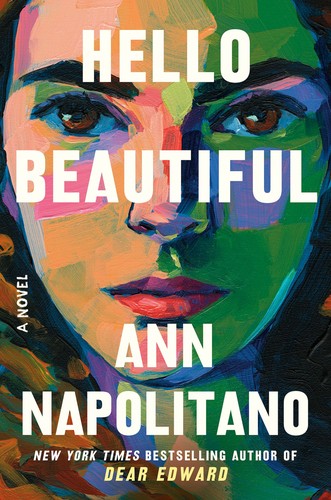
Hello Beautiful by Ann Napolitano is a 2023 literary fiction book about generational trauma, motherhood and abandonment, race and family. Trauma is not just psychological — it is structural, reshaping relationships across generations in ways the people within those relationships may not be able to see.
Summary
Hello Beautiful follows four generations of the Padavano family, beginning in Chicago in the 1920s and ending in the early 2000s. The novel opens with William Waters, a young man so damaged by his own childhood — a dead infant sister his mother never recovered from — that he cannot love his daughter Julia, who grows up to become the matriarch of the family the novel is really about. Julia's daughters, and their daughters, carry the weight of William's failure forward across eighty years. It is a novel about what gets passed down that no one chooses to pass down.
The novel won the Pulitzer Prize for Fiction in 2023, and the scope justifies the distinction. Napolitano is writing in the tradition of the multigenerational American family novel — Updike, Eugenides, Franzen — but her interest is specifically in what happens to the women. The four Padavano sisters are the center of the book's middle section: Julia, the eldest, fierce and frightened; Cecelia, the artist; Emeline, the nurturer; Sylvie, the reader and dreamer. Their lives interweave across decades, pulling apart and returning, and their individual choices ripple across generations in ways none of them fully see.
Napolitano writes with clarity and emotional directness that avoids sentimentality through rigorous attention to consequence. The novel does not ask you to forgive its characters; it asks you to understand how they became capable of what they did. The Chicago setting — the neighborhoods, the Catholic church, the waves of migration and change — is present as more than background. Race enters the novel through the marriage of one of the sisters to a Black man, and the novel is honest about what that cost the family in the mid-twentieth century without making the marriage primarily about its social context.
This is not a light book. It covers eighty years of damage and attempts at repair, and it does not pretend the repair is complete or the damage erasable. Readers who want scope, careful prose, and a novel that takes family seriously as a subject for literary fiction will find it rewarding. Readers who want momentum and compression will find the four-generation span slow in places. The ending is earned in the specific way only long novels can earn their endings.
Talk to Hello Beautiful like its author wrote you back.
Get the ideas that fit your life — not generic summaries.
- Chat with the book
- Audiobook-style main ideas
- Adapts to your life and goals
- Helps you take action
Key takeaways
- 1.
Trauma is not just psychological — it is structural, reshaping relationships across generations in ways the people within those relationships may not be able to see.
- 2.
Napolitano shows that the person most damaged by a family wound is often not the person who suffered it first but the one who inherits the silence around it.
- 3.
The four sisters represent different strategies for surviving the same childhood, and the novel tracks which strategies cost more over time.
- 4.
Forgiveness in the novel is not an event but a slow reorientation — several characters achieve it only in old age, and some don't fully achieve it at all.
- 5.
William Waters is simultaneously the novel's villain and its most pitiable character: a man so destroyed by his own childhood that he could not function as a father, who knew it and could not change.
- 6.
The novel makes a quiet case that art — Cecelia's painting — is one of the few ways that something true about a family can be preserved without being spoken.
- 7.
Race is handled with honesty about what interracial marriage cost in mid-century America, without reducing that marriage to its social difficulty.
- 8.
The scope of four generations is necessary: some wounds don't show their full shape until they've had eighty years to develop.
Discussion questions
Use these on your own, with a book club, or as chat starters in Superbook. Book club version, ready to copy or print →
- 1.
William Waters is unable to love his daughter. The novel traces why in detail. Does understanding his reasons change how you feel about what he did?
- 2.
Julia is the character who holds the family together while also being one of the people who breaks it. How did your feeling about her shift over the novel?
- 3.
The four sisters take such different paths from the same starting point. Which sister did you find yourself thinking about most after finishing the book?
- 4.
The novel won the Pulitzer Prize. Does that feel right to you based on your reading? What do you think the committee saw in it?
- 5.
Forgiveness appears repeatedly, always complicated. Which act of forgiveness in the novel felt most earned? Which felt incomplete?
- 6.
Race enters the novel through Sylvie's marriage and its consequences. Did the novel handle that material with sufficient depth, or did it feel like one thread among too many?
- 7.
The Catholic church is a persistent presence. How does religion function in the novel — as comfort, constraint, or something more ambiguous?
- 8.
Napolitano covers eighty years across four generations. Were there sections where the scope felt like too much — where you wanted to slow down and stay in one era?
- 9.
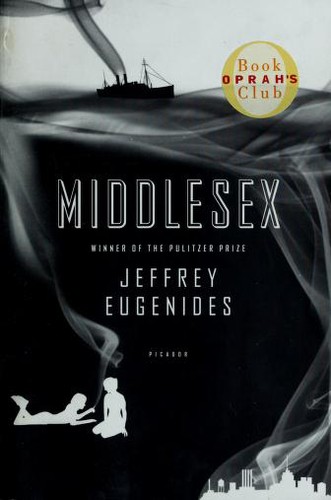
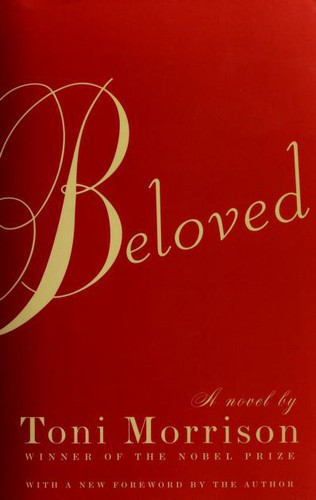
Compared to other multigenerational family novels you've read — Middlesex, The Corrections, Beloved — where does Hello Beautiful land in terms of scope and ambition?
- 10.
The ending brings multiple generations into proximity in a way that might feel too neat. Did it earn that convergence, or did it tip into sentiment?
- 11.
William is described early as someone who simply cannot love. Is that a sufficient explanation, or does the novel let him off too easily by pathologizing his failure?
- 12.
What do you think the title refers to? There are at least two plausible readings.
Themes
Frequently asked questions
-
Is Hello Beautiful worth reading?
Yes, if you have the patience for an eighty-year multigenerational scope. The prose is careful, the characters are fully realized, and the novel earns its emotional payoff over distance. It is not a fast read, but it is a rewarding one.
-
Why did Hello Beautiful win the Pulitzer?
It was a somewhat surprising choice — other titles on that year's list had more critical buzz. The Pulitzer board cited the novel's ambitious scope and its treatment of family trauma across generations. Opinions differ on whether it was the strongest novel of the year, but its ambition is not in doubt.
-
Is it related to Dear Edward?
No. They share an author but are completely separate books with different characters and settings. Dear Edward concerns a plane crash survivor; Hello Beautiful is a multigenerational Chicago family saga.
-
How long does it take to read?
Around seven to eight hours at average pace. The novel is 400-plus pages and the scope means the pacing is measured rather than propulsive. It rewards sustained reading sessions rather than short bursts.
-
Who might not enjoy this book?
Readers who want momentum and narrative drive may find the multigenerational structure slow. The novel builds meaning cumulatively rather than through plot, and some readers will find that accumulation rewarding while others find it diffuse.