Talk to High Output Management like its author wrote you back.
Get the ideas that fit your life — not generic summaries.
- Chat with the book
- Audiobook-style main ideas
- Adapts to your life and goals
- Helps you take action
What it argues
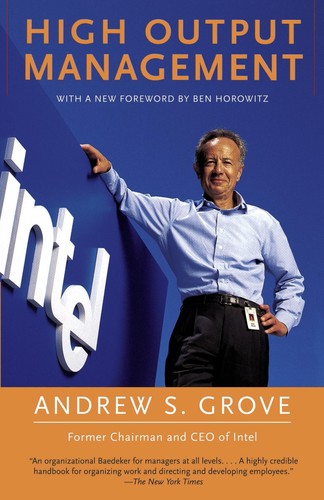
High Output Management is Andrew Grove's manual for how managers at any level should think about their work. Grove was Intel's president when he wrote it, and the book reads like a distillation of what he actually learned running one of the most demanding engineering organizations in the world. The central claim is simple but radical: a manager's output is the output of their team, not their own individual work. That shift in framing changes almost everything that follows.
Grove builds his framework around the idea of leverage. Every task a manager performs has some multiplying effect on the people and processes around them. A well-run one-on-one meeting or a clearly reasoned hiring decision might affect dozens of people for months. A poorly organized meeting or a delayed decision has the same multiplying effect in the other direction. The job is to identify high-leverage activities and do more of them, while finding ways to delegate or eliminate everything else.
What it gets right
- 1.
A manager's output is the output of their organization, not their own individual work. Measuring personal busyness misses the point entirely.
- 2.
Leverage is the key concept: every managerial action multiplies across the team. High-leverage activities like one-on-ones and hiring decisions have outsized downstream effects.
- 3.
The production metaphor applies to management. Identify the limiting step in any process, optimize around it, and treat meetings as part of the production system, not interruptions to it.
What it covers
Who wrote it
Andrew S. Grove was a Hungarian-born American engineer and executive who co-founded Intel Corporation and served as its CEO from 1987 to 1998, a period that included the company's rise to dominance in microprocessors. He is credited with coining the business phrase "only the paranoid survive" and wrote several influential books, including Only the Paranoid Survive and Swimming Across, his memoir of escaping Communist Hungary. Grove was named Time magazine's Man of the Year in 1997. He taught at Stanford Business School and remained closely involved in technology industry discussions until his death in 2016.
