Talk to High Output Management like its author wrote you back.
Get the ideas that fit your life — not generic summaries.
- Chat with the book
- Audiobook-style main ideas
- Adapts to your life and goals
- Helps you take action
High Output Management, in detail
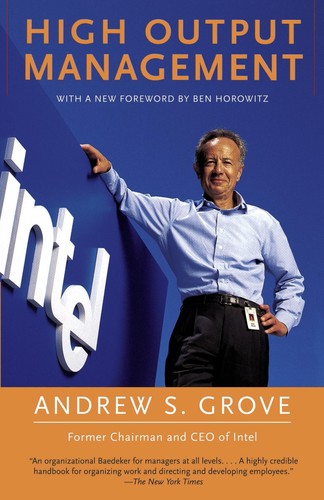
High Output Management is Andrew Grove's manual for how managers at any level should think about their work. Grove was Intel's president when he wrote it, and the book reads like a distillation of what he actually learned running one of the most demanding engineering organizations in the world. The central claim is simple but radical: a manager's output is the output of their team, not their own individual work. That shift in framing changes almost everything that follows.
Grove builds his framework around the idea of leverage. Every task a manager performs has some multiplying effect on the people and processes around them. A well-run one-on-one meeting or a clearly reasoned hiring decision might affect dozens of people for months. A poorly organized meeting or a delayed decision has the same multiplying effect in the other direction. The job is to identify high-leverage activities and do more of them, while finding ways to delegate or eliminate everything else.
The book introduces several tools that have become standard vocabulary in tech companies. OKRs — objectives and key results — appear here in their earliest clear articulation, though Grove called them by slightly different names. The concept of the managerial "production process," borrowed explicitly from manufacturing, frames everything from running meetings to making hiring decisions as steps in a repeatable system that can be observed, measured, and improved. Grove is also unusually direct about the manager's role in performance: if a subordinate is underperforming, the diagnosis is almost always either a skill gap or a motivation gap, and each requires a different response.
What holds the book together is Grove's intellectual honesty. He does not pretend management is easy or that good intentions are enough. He acknowledges that meetings, the most maligned tool in organizational life, are genuinely necessary when used correctly. He writes about being a "high-output manager" not as a personality type but as a set of practices anyone can learn. The book is not long, but it is dense — chapters reward re-reading once you have a team to manage and can match the ideas to real situations. Readers who have never managed anyone will find some sections abstract; readers who manage managers will find Grove's thinking on dual reporting structures and decision-making authority particularly sharp.
The big ideas
- 1.
A manager's output is the output of their organization, not their own individual work. Measuring personal busyness misses the point entirely.
- 2.
Leverage is the key concept: every managerial action multiplies across the team. High-leverage activities like one-on-ones and hiring decisions have outsized downstream effects.
- 3.
The production metaphor applies to management. Identify the limiting step in any process, optimize around it, and treat meetings as part of the production system, not interruptions to it.
