Talk to Homegoing like its author wrote you back.
Get the ideas that fit your life — not generic summaries.
- Chat with the book
- Audiobook-style main ideas
- Adapts to your life and goals
- Helps you take action
Homegoing, in detail
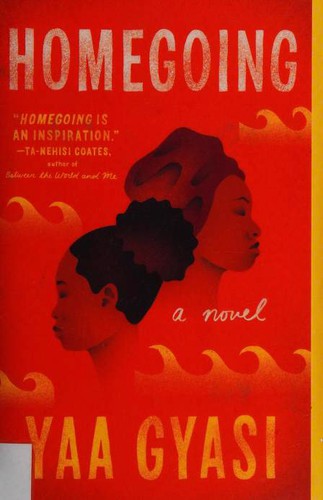
Homegoing begins in eighteenth-century Ghana with two half-sisters who never meet. Effia marries a British slave-trade official and lives in the Cape Coast Castle above the dungeons where enslaved people are held before the Middle Passage. Esi is among those enslaved. The novel then follows one chapter per generation, alternating between the Ghanaian branch of the family and the American branch descended from Esi, down through to the present day — fourteen chapters, seven generations per lineage, covering roughly three hundred years.
The structural ambition is enormous and so is the historical range: the chapters move through the Asante Confederacy, the Middle Passage, American plantation slavery, Reconstruction, the coal mines of Alabama, the Great Migration, Harlem in the 1960s, the crack epidemic, and contemporary Ghana and America. Each chapter is a compressed novella about a single character — a person trying to make a life in the historical circumstances they inherited — and the novel's argument is that those circumstances are always inherited, that the slave trade's legacy is not historical but ongoing and immediate.
What Gyasi does with great skill is resist the temptation to make the novel a march of suffering. The chapters set in Ghana are not universally free or triumphant; the Ghanaian characters are implicated in the slave trade, complicit in it, and damaged by it differently from their American counterparts. The novel's honesty about African complicity in the trade — Effia's husband is Ghanaian-British, his trade is enabled by local cooperation — is one of its more serious and less commonly discussed aspects.
This is a debut novel, and it shows in places: some chapters feel more fully inhabited than others, and the final chapter's attempt to bring the two lineages together is slightly too neat. But the structural vision is extraordinary, and the individual chapters that work — particularly the ones set during Reconstruction and the Great Depression — are as good as short fiction gets. For readers drawn to generational novels, epic scope, and the intersection of personal and historical, this is essential.
The big ideas
- 1.
The two-lineage structure forces a constant implicit comparison: what diverged from the same origin point? The answer the novel gives is not simply slavery but the different forms colonialism takes on different sides of the Atlantic.
- 2.
Gyasi implicates Ghanaian coastal elites in the slave trade explicitly and unflinchingly — the novel is not a simple story of African victimhood and European villainy.
- 3.
Each chapter is essentially a standalone story, which means the emotional investment must be rebuilt with each new protagonist — a structural cost that the novel pays in the depth of each individual chapter.
