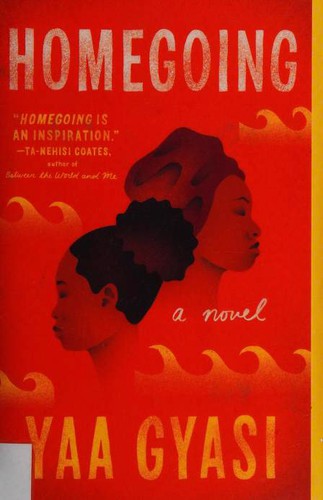
Homegoing by Yaa Gyasi is a 2016 historical fiction book about generational trauma, the african diaspora, slavery and its long aftermath. The two-lineage structure forces a constant implicit comparison: what diverged from the same origin point? The answer the novel gives is not simply slavery but the different forms colonialism takes on different sides of the Atlantic.
Summary
Homegoing begins in eighteenth-century Ghana with two half-sisters who never meet. Effia marries a British slave-trade official and lives in the Cape Coast Castle above the dungeons where enslaved people are held before the Middle Passage. Esi is among those enslaved. The novel then follows one chapter per generation, alternating between the Ghanaian branch of the family and the American branch descended from Esi, down through to the present day — fourteen chapters, seven generations per lineage, covering roughly three hundred years.
The structural ambition is enormous and so is the historical range: the chapters move through the Asante Confederacy, the Middle Passage, American plantation slavery, Reconstruction, the coal mines of Alabama, the Great Migration, Harlem in the 1960s, the crack epidemic, and contemporary Ghana and America. Each chapter is a compressed novella about a single character — a person trying to make a life in the historical circumstances they inherited — and the novel's argument is that those circumstances are always inherited, that the slave trade's legacy is not historical but ongoing and immediate.
What Gyasi does with great skill is resist the temptation to make the novel a march of suffering. The chapters set in Ghana are not universally free or triumphant; the Ghanaian characters are implicated in the slave trade, complicit in it, and damaged by it differently from their American counterparts. The novel's honesty about African complicity in the trade — Effia's husband is Ghanaian-British, his trade is enabled by local cooperation — is one of its more serious and less commonly discussed aspects.
This is a debut novel, and it shows in places: some chapters feel more fully inhabited than others, and the final chapter's attempt to bring the two lineages together is slightly too neat. But the structural vision is extraordinary, and the individual chapters that work — particularly the ones set during Reconstruction and the Great Depression — are as good as short fiction gets. For readers drawn to generational novels, epic scope, and the intersection of personal and historical, this is essential.
Talk to Homegoing like its author wrote you back.
Get the ideas that fit your life — not generic summaries.
- Chat with the book
- Audiobook-style main ideas
- Adapts to your life and goals
- Helps you take action
Key takeaways
- 1.
The two-lineage structure forces a constant implicit comparison: what diverged from the same origin point? The answer the novel gives is not simply slavery but the different forms colonialism takes on different sides of the Atlantic.
- 2.
Gyasi implicates Ghanaian coastal elites in the slave trade explicitly and unflinchingly — the novel is not a simple story of African victimhood and European villainy.
- 3.
Each chapter is essentially a standalone story, which means the emotional investment must be rebuilt with each new protagonist — a structural cost that the novel pays in the depth of each individual chapter.
- 4.
The novel argues that trauma is material and heritable — what is passed down is not psychology but actual material circumstance, debt, displacement, addiction — each generation starts from where the previous one ended up.
- 5.
The Alabama coal mines chapter reveals how convict leasing extended slavery by another name into the twentieth century — one of several moments where the novel insists that Reconstruction and its failure are not ancient history.
- 6.
Harlem in the 1960s chapters show how the Great Migration relocated but did not resolve the core dynamic — freedom of movement without freedom of opportunity is a different kind of trap.
- 7.
The contemporary American chapters, particularly the crack epidemic section, show how material deprivation is criminalized across generations — the same mechanisms, different names.
- 8.
The final chapter's reunion is emotionally satisfying but slightly too schematic — it resolves narrative threads in a way that the rest of the novel's unsentimental logic didn't quite prepare for.
Discussion questions
Use these on your own, with a book club, or as chat starters in Superbook. Book club version, ready to copy or print →
- 1.
The novel opens with Effia marrying a British slave trader, living above the dungeons where enslaved people including her sister are held. Is Effia complicit? Does the novel judge her?
- 2.
Gyasi depicts Ghanaian coastal peoples as participants in the slave trade, not just victims of it. How did that change your understanding of the novel's moral geography?
- 3.
The two-lineage structure means we spend only one chapter with each character. Did this feel limiting, or did it accurately represent how individuals are subsumed by history?
- 4.
Which chapter hit hardest for you? Which character did you most want to follow further?
- 5.
Convict leasing — the practice of arresting Black men on minor charges and leasing them to coal mines and farms — is depicted in one of the Alabama chapters. Many readers are unfamiliar with this practice. Did the novel change how you think about the period between Emancipation and the Civil Rights era?
- 6.
The novel suggests that material conditions, not psychological ones, are the real inheritance of slavery. Do you find this argument persuasive? Does it change how you think about contemporary racial disparities?
- 7.
The Ghanaian chapters depict a society changing under British colonialism in ways that parallel but differ from American slavery. What does holding both storylines simultaneously add to the novel's argument?
- 8.
The crack epidemic chapter is among the most contemporary. Does the novel succeed in connecting that story to the historical chain, or does the connection feel forced?
- 9.
Homegoing was praised for its scope and criticized by some for its lack of depth in individual characters. Which criticism feels more true to you after reading it?
- 10.
The final chapter brings the two lineages together. Did you find that earned? Or did it feel like a concession to the desire for resolution that the novel had been resisting?
- 11.
This was Yaa Gyasi's debut novel, written when she was in her mid-twenties. Does knowing that change how you read it? What do you think she got right that more experienced novelists might not have?
- 12.
If you were going to teach this novel in a course, which two chapters would you pair together and what would you want students to discuss?
Themes
Frequently asked questions
-
Is Homegoing worth reading?
Yes — the structural ambition alone makes it worth reading, and the best individual chapters are genuinely extraordinary. The debut novel roughness in certain sections is real but minor compared to what the book achieves.
-
Is Homegoing hard to follow with so many characters?
The structure — one chapter, one character, clearly dated — makes it easy to follow once you have the two family trees established. A brief genealogy chart appears at the beginning of the novel. Most readers find the structure intuitive rather than confusing.
-
Do I need to know African history to read Homegoing?
No. Gyasi provides context within the narrative. Knowledge of American history from slavery through the twentieth century will help, but the novel largely teaches what it needs to teach.
-
How does Homegoing compare to Roots by Alex Haley?
Both are multi-generational novels tracing the African American experience from West Africa to modern America. Homegoing is more structurally innovative and more honest about African complicity in the trade. Roots is a longer, more immersive single narrative. They complement each other.
-
Who shouldn't read Homegoing?
Readers who need sustained immersion in a small number of characters rather than a sequence of new ones. Also readers who want tonal consistency — the novel shifts register considerably across its fourteen chapters.
Similar books
The Underground Railroad
Colson Whitehead
The Warmth of Other Suns
Isabel Wilkerson
Between the World and Me
Ta-Nehisi Coates
Stamped from the Beginning: The Definitive History of Racist Ideas in America
Ibram X. Kendi
