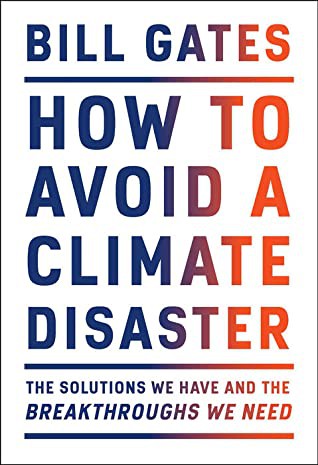
Talk to How to Avoid a Climate Disaster like its author wrote you back.
Get the ideas that fit your life — not generic summaries.
- Chat with the book
- Audiobook-style main ideas
- Adapts to your life and goals
- Helps you take action
What it argues
How to Avoid a Climate Disaster is Bill Gates's attempt to explain the scale of the climate problem and outline what it would actually take to reach zero greenhouse gas emissions by 2050. Gates writes as a technologist and investor who spent a decade educating himself on energy systems, and the book reflects both the strengths and the limitations of that vantage point. It is more precise about engineering constraints than most popular climate books, and more honest about which solutions are ready and which are not.
The book's organizing framework is the 51 billion tons of greenhouse gases emitted globally each year. Gates walks through each major sector — electricity generation, manufacturing, agriculture, transportation, buildings, and land use — explaining where the emissions come from and what a zero-carbon alternative would require. His "Green Premium" concept, the cost difference between a fossil fuel solution and its clean equivalent, is the most useful analytical tool in the book. It focuses attention on where the technology gap is small (electricity, some vehicles) and where it remains enormous (steel, cement, aviation, fertilizer).
What it gets right
- 1.
The number to understand is 51 billion: tons of greenhouse gases emitted globally each year. Getting to zero means eliminating essentially all of them, not just cutting them by half.
- 2.
The Green Premium — the cost difference between a clean alternative and its fossil fuel equivalent — is the key metric for tracking progress and targeting investment. Where it's low or negative, deployment can proceed now.
- 3.
Electricity is the easiest sector to decarbonize; steel, cement, aviation fuel, and agricultural emissions are the hardest and receive far less attention than they deserve.
What it covers
Who wrote it
Bill Gates is a co-founder of Microsoft, where he served as CEO until 2000 and as chairman until 2014. Through the Bill and Melinda Gates Foundation, he has been one of the world's largest funders of global health and development programs. His climate work is channeled primarily through Breakthrough Energy, a coalition of investors funding clean energy research. How to Avoid a Climate Disaster draws on more than a decade of study and investment in energy technology. Gates also writes regularly at gatesnotes.com, where he reviews books and discusses science, technology, and policy.
