Talk to How to Change Your Mind like its author wrote you back.
Get the ideas that fit your life — not generic summaries.
- Chat with the book
- Audiobook-style main ideas
- Adapts to your life and goals
- Helps you take action
What it argues
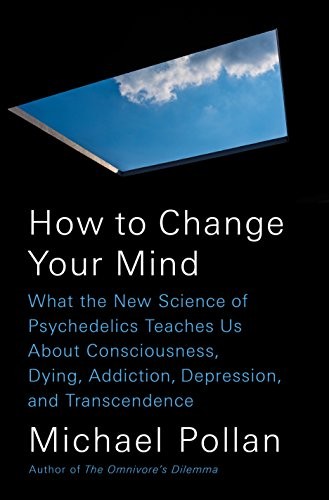
Michael Pollan came to psychedelics late in life, as a skeptic. How to Change Your Mind is his attempt to understand what LSD and psilocybin actually do — to the brain, to consciousness, and to people who use them therapeutically. The book is simultaneously a cultural history of psychedelic research, a neuroscience explainer, a series of portraits of researchers and guides, and a first-person account of Pollan's own experiences with psilocybin, LSD, and 5-MeO-DMT. The combination is unusual and mostly works.
The historical sections cover the first wave of psychedelic research in the 1950s and 1960s, when LSD was an active area of psychiatric inquiry with thousands of published papers and serious clinical interest, and then the abrupt shutdown that followed Timothy Leary's cultural detonation and the Nixon administration's scheduling decisions. Pollan's reporting makes clear that the shutdown was politically rather than scientifically motivated — the evidence base that was accumulating in the mid-1960s was stronger than most people now assume. He then covers the second wave beginning in the 1990s and accelerating through the 2010s, centered at Johns Hopkins, NYU, and Imperial College London, where psilocybin has shown striking results in clinical trials for treatment-resistant depression, addiction, and end-of-life anxiety.
What it gets right
- 1.
Psilocybin and LSD suppress the default mode network, the brain circuitry underlying the sense of self. The dissolution of ego that results may be the mechanism through which lasting psychological change occurs.
- 2.
The first wave of psychedelic research in the 1950s and 1960s produced thousands of peer-reviewed papers. The Nixon-era scheduling of these substances as Schedule I was a political rather than scientific decision.
- 3.
In Johns Hopkins and NYU clinical trials, a single guided psilocybin session produced sustained reductions in depression and anxiety in cancer patients — results that antidepressants taken daily did not achieve.
What it covers
Who wrote it
Michael Pollan is a journalist and author whose work has focused on the intersection of humans and the natural world, particularly in the domains of food and now consciousness. He is a professor of journalism at UC Berkeley and Harvard and the author of The Omnivore's Dilemma, In Defense of Food, The Botany of Desire, and Cooked, among others. How to Change Your Mind represented a significant departure from his food writing and introduced him to an entirely new set of scientists and practitioners. He has continued to write and speak about psychedelic medicine and co-founded the UC Berkeley Center for the Science of Psychedelics.
