Talk to How to like its author wrote you back.
Get the ideas that fit your life — not generic summaries.
- Chat with the book
- Audiobook-style main ideas
- Adapts to your life and goals
- Helps you take action
How to, in detail
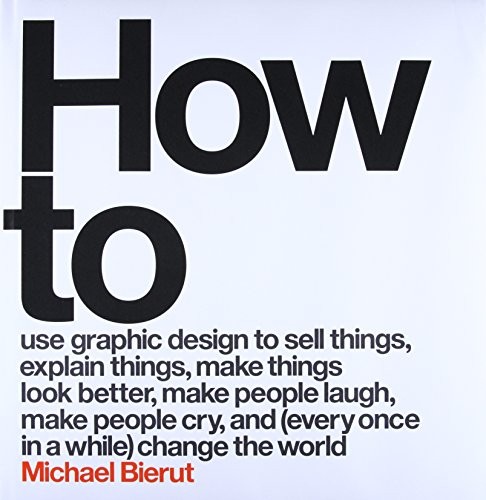
How to is Michael Bierut's account of thirty-five years of practice as a graphic designer at Pentagram, the world's largest independent design firm. The book is organized around thirty-five projects — one per year of practice — and each chapter tells the story of a single job: the brief, the process, the unexpected turns, and what Bierut took from it. The projects range from museum identity systems and political campaigns to corporate rebrands and book covers.
Bierut is a clear writer and an honest one. The chapters are not arranged to show a designer who always knew the right answer. Several projects failed, or landed differently than intended, or were hijacked by client decisions that changed what had been a good idea into a compromised one. The chapter on the Hillary Clinton 2016 campaign logo — Bierut designed it — is one of the best accounts of what it is actually like to design something that millions of people have strong opinions about, and to watch it enter a discourse the designer cannot control.
One thread running through the book is the relationship between constraint and creativity. Bierut is skeptical of the idea that the best design comes from total freedom. The most interesting work in his career has consistently emerged from difficult constraints: the need to satisfy multiple constituencies, a budget that requires simplicity, a client whose tastes are unlike your own. Constraint is not the enemy of good design but one of its productive conditions.
A second thread is the designer's relationship to meaning. Graphic design is applied art — it exists in service of something else. Bierut argues that the best designers care genuinely about the subject matter of their commissions, and that caring about content produces better form than treating every brief as an aesthetic puzzle to solve. This is not a universal view in design culture, where some traditions hold formalism above content, but Bierut makes the case with enough specific examples that it reads as hard-won rather than conventional.
The big ideas
- 1.
Graphic design is always in service of something else — a client, a cause, a message. Caring genuinely about that content tends to produce better form than treating every project as a purely aesthetic exercise.
- 2.
Constraint is a productive condition, not an obstacle. Many of Bierut's strongest projects emerged from tight budgets, difficult clients, or conflicting requirements.
- 3.
The designer cannot control how work is received. The Hillary Clinton logo chapter shows that a well-reasoned design decision can be swept away in a cultural context the designer neither anticipated nor caused.
