Talk to Humble Leadership like its author wrote you back.
Get the ideas that fit your life — not generic summaries.
- Chat with the book
- Audiobook-style main ideas
- Adapts to your life and goals
- Helps you take action
What it argues
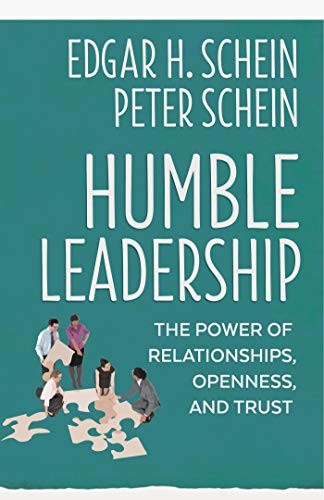
Humble Leadership is Edgar Schein and Peter Schein's argument that the command-and-control model of management is failing precisely when organizations need it most. Complex, fast-moving problems require candid information flowing upward, genuine collaboration across silos, and people willing to flag risks early — none of which happens when employees relate to leaders as distant authority figures.
The Scheins introduce a framework of relationship levels. Level 1 is the transactional relationship most workplaces default to: professional, polite, role-defined. Level 2 is a personal relationship built on some knowledge of each other as full human beings. Level 3 is deep intimacy, usually reserved for close friends. Their core claim is that most organizations are stuck at Level 1 when the complexity of their work requires Level 2. Humble leadership is the practice of deliberately moving relationships up.
What it gets right
- 1.
Most organizations operate at Level 1 relationships — transactional and role-defined — when their complexity requires Level 2, which is personal and trust-based.
- 2.
Humble leadership means being genuinely curious about the people you work with, not performing openness while maintaining traditional authority.
- 3.
Complex adaptive problems cannot be solved by a leader at the top issuing directives. They require honest information flowing in both directions.
What it covers
Who wrote it
Edgar H. Schein is Professor Emeritus at the MIT Sloan School of Management and one of the most influential figures in organizational psychology. He is the author of Organizational Culture and Leadership, Career Anchors, and Humble Inquiry, among many others. His research on corporate culture, psychological safety, and organizational development has shaped management thinking for five decades. Peter A. Schein is a Silicon Valley technology executive who has worked with his father on organizational consulting for many years. Humble Leadership is their first book co-authored together.
