Talk to Humble Leadership like its author wrote you back.
Get the ideas that fit your life — not generic summaries.
- Chat with the book
- Audiobook-style main ideas
- Adapts to your life and goals
- Helps you take action
Humble Leadership, in detail
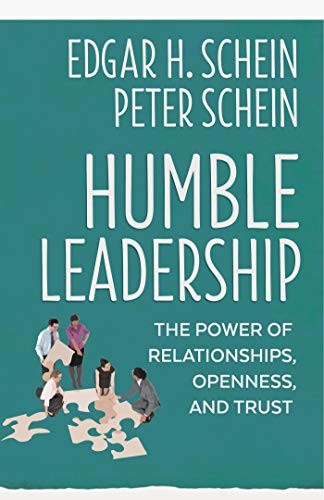
Humble Leadership is Edgar Schein and Peter Schein's argument that the command-and-control model of management is failing precisely when organizations need it most. Complex, fast-moving problems require candid information flowing upward, genuine collaboration across silos, and people willing to flag risks early — none of which happens when employees relate to leaders as distant authority figures.
The Scheins introduce a framework of relationship levels. Level 1 is the transactional relationship most workplaces default to: professional, polite, role-defined. Level 2 is a personal relationship built on some knowledge of each other as full human beings. Level 3 is deep intimacy, usually reserved for close friends. Their core claim is that most organizations are stuck at Level 1 when the complexity of their work requires Level 2. Humble leadership is the practice of deliberately moving relationships up.
Edgar Schein, now in his late eighties and one of the founding figures of organizational psychology, brings decades of accumulated case material. The book draws on consulting work across industries — healthcare, high tech, military, manufacturing — to show what Level 2 relationships look like in practice and what they produce. Nurses who speak up when physicians are about to make errors. Teams that surface bad news early enough to do something about it. Engineers who tell program managers what's actually possible instead of what they think management wants to hear.
The book is slim and readable but deliberately provocative. The Scheins don't offer a checklist for becoming a humble leader. They argue instead that humility is a posture — an honest interest in the people around you — and that it has to be genuine to work. Leaders who treat "getting personal" as a tactic for extracting performance will fail. The argument's strength is its grounding in real organizational failures. Its limitation is that it's better at diagnosing what goes wrong than at prescribing how to change deeply embedded hierarchical cultures.
The big ideas
- 1.
Most organizations operate at Level 1 relationships — transactional and role-defined — when their complexity requires Level 2, which is personal and trust-based.
- 2.
Humble leadership means being genuinely curious about the people you work with, not performing openness while maintaining traditional authority.
- 3.
Complex adaptive problems cannot be solved by a leader at the top issuing directives. They require honest information flowing in both directions.
