Science fiction · Book club
Hyperion book club questions
Here are 12 book club questions for Hyperion by Dan Simmons, ordered to open easily and end somewhere worth arguing about. Copy them, print them, or bring them up one at a time.
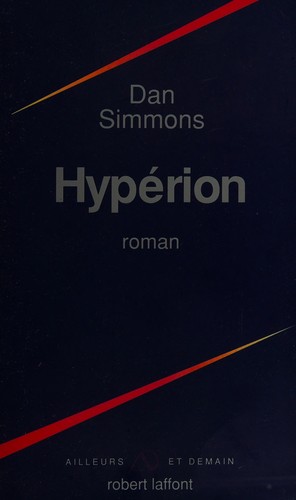
Seven pilgrims travel to the dying world of Hyperion, each knowing the journey is likely a one-way trip.
Dan Simmons · 1989 · 11h 45m
Full summary and key takeaways →The 12 questions
- 1.
Which of the six pilgrim tales resonated most with you, and which fell flat? What does that say about what you look for in fiction?
- 2.
The Shrike is never explained. Does the book work better because of that, or do you find it frustrating? What would explaining it cost?
- 3.
Simmons structures the novel as Canterbury Tales. Does that frame feel earned by the end, or does it feel like a literary conceit straining under its own weight?
- 4.
Father Hoyt's cruciform grants painful immortality. Is that a metaphor for religious faith, for survival guilt, or something else entirely?
- 5.
The Consul's tale ends on a choice that is both devastating and arguably justified. Was it defensible? What would you have done?
- 6.
The TechnoCore secretly runs human civilization. Does the novel suggest humans are complicit in their own dependency, or are they simply victims?
- 7.
Martin Silenus's tale shows art consuming its creator. Is the book sympathetic to him, or is it a cautionary portrait? Can both be true?
- 8.
Hyperion ends without resolution. Did that feel like a betrayal of the reader's investment, or does the open ending serve the themes?
- 9.
The book is saturated with Keats. Do you need to know Keats to appreciate it, or does Simmons make the references accessible to those who don't?
- 10.
Several characters' stories hinge on what they sacrificed for love. Does Simmons romanticize that sacrifice, or examine it critically?
- 11.
The Ousters — humans who have adapted to live outside planetary gravity — are presented as alien despite being human. What does the book seem to think about the relationship between environment and identity?
- 12.
If you were a seventh pilgrim, what story would you bring to the group?
How to run the discussion
- Pick six to eight, not all of them. An hour of real discussion covers fewer questions than anyone expects, and racing the list is what makes a book club feel like homework.
- Open with what people noticed, not what they concluded. Asking for a verdict first hardens opinions before anyone has heard each other.
- Let the disagreement run. The questions below that split a room are the ones worth the time; the ones everyone answers the same way can be skipped.
- Ask the quiet person a specific question. A direct, narrow question is far easier to answer than an open invitation to contribute.
Themes worth steering toward
If the conversation stalls, these are the threads that usually restart it.
Common questions
What are good book club questions for Hyperion?
Here are 12 book club questions for Hyperion by Dan Simmons, ordered to open easily and end somewhere worth arguing about. The strongest openers ask what each reader noticed rather than what they concluded, and the discussion usually turns on fate and sacrifice, time and memory, religion and faith.
How long should a book club discussion of Hyperion last?
Most groups run 60 to 90 minutes of actual discussion. That is roughly six to eight questions, not all of them, so pick the ones that suit your group rather than working down the list in order.
What are the main themes in Hyperion?
Fate and sacrifice, Time and memory, Religion and faith, Human fragility, War and empire. Those are the threads most likely to divide a room, which makes them the useful places to steer a discussion that has gone quiet.
Picking the next one? See books like Hyperion or questions for other book club picks.
