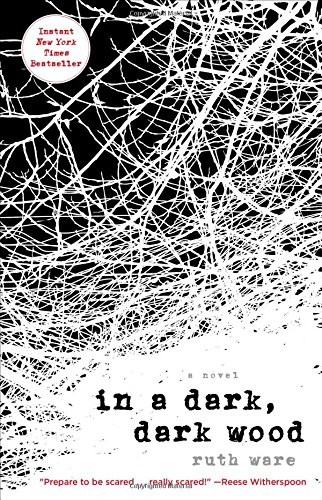
Talk to In a Dark, Dark Wood like its author wrote you back.
Get the ideas that fit your life — not generic summaries.
- Chat with the book
- Audiobook-style main ideas
- Adapts to your life and goals
- Helps you take action
What it argues
Nora receives an out-of-the-blue invitation to a hen party she has no reason to attend — it's for Clare, a friend she hasn't spoken to in ten years, whose circle Nora no longer belongs to. She accepts anyway, and finds herself in a remote glass-and-steel house in the middle of a Northumberland forest, surrounded by people who know Clare far better than she does, some of whom barely bother to conceal their hostility. Two days in, someone is dead and Nora is in hospital with head injuries and no memory of what happened.
The novel opens with Nora already injured, already knowing something terrible has occurred, and the narrative works backward and forward simultaneously: present-tense hospital scenes intercut with the slowly-remembered events of the weekend. Ware uses the amnesia frame effectively — the reader's knowledge and Nora's recover at roughly the same pace, which prevents the dramatic irony from becoming frustrating. The isolated house, the locked-in group of people with prior relationships and concealed resentments, and the surrounding forest that makes escape feel impossible are all Agatha Christie premises handled with contemporary directness.
What it gets right
- 1.
The hen party setting does real work: the cultural pressure to perform warmth regardless of actual feeling creates a specific social pressure cooker that the isolated-house premise then seals shut.
- 2.
Ware's decision to open with Nora already hospitalized and amnesiac creates a double narrative tension: the reader wants to know both what happened and what Nora will remember.
- 3.
The glass house — entirely visible from outside, with nowhere to hide — inverts the usual isolated-house thriller convention and creates a different kind of claustrophobia.
What it covers
Who wrote it
Ruth Ware is a British thriller writer whose 2015 debut In a Dark, Dark Wood launched one of the most consistent bestselling careers in contemporary domestic noir. Before publishing fiction she worked in bookselling, marketing, and as a waitress and au pair, and those years in observation of social dynamics are visible throughout her work. She has published seven novels, all international bestsellers, and is particularly known for deploying isolated settings — a forest house, a cruise ship, a Scottish manor, a Scottish island — with atmospheric confidence. She lives in Sussex.
