Psychology · Book club
In an Unspoken Voice: How the Body Releases Trauma and Restores Goodness book club questions
Here are 12 book club questions for In an Unspoken Voice: How the Body Releases Trauma and Restores Goodness by Peter A. Levine, ordered to open easily and end somewhere worth arguing about. Copy them, print them, or bring them up one at a time.
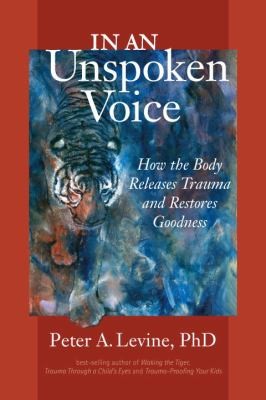
Peter Levine's central claim is that trauma is not primarily a psychological wound but a physiological one.
Peter A. Levine · 2010 · 6h 45m
Full summary and key takeaways →The 12 questions
- 1.
Levine argues that trauma is physiological before it is psychological. Does this reframe how you understand symptoms like anxiety, numbness, or chronic pain?
- 2.
The book describes how animals discharge trauma through shaking and trembling that humans typically suppress. When have you noticed the impulse to shake or tremble and suppressed it?
- 3.
Somatic Experiencing works with sensation rather than narrative. What would it mean to work with a difficult experience without having to tell its story?
- 4.
Levine uses his own car accident to illustrate the survival response. What did he notice about his own body's automatic reactions that you found most surprising?
- 5.
The freeze response is described as mobilization plus inhibition simultaneously. Does this account of freeze as active rather than passive change how you interpret past moments of paralysis?
- 6.
The book distinguishes traumatic stress from ordinary stress. What criteria does Levine use, and how useful are they for understanding your own responses?
- 7.
Levine argues that effective trauma work requires titration — small doses of activation followed by discharge. How does this contrast with exposure-based therapies, and what are the tradeoffs?
- 8.
The therapeutic relationship is described as a co-regulatory system. What does this suggest about why the quality of that relationship matters so much in trauma treatment?
- 9.
How do social and cultural norms around emotional expression shape which groups are more likely to develop chronic post-traumatic symptoms?
- 10.
The book draws heavily on animal behavior. How useful do you find the ethological comparisons, and where do they start to obscure specifically human dimensions of trauma?
- 11.
Levine suggests that the body contains its own healing intelligence. What evidence from your own experience either supports or challenges that claim?
- 12.
If you were recommending this book to someone unfamiliar with somatic work, what would you tell them to expect, and what are its limits?
How to run the discussion
- Pick six to eight, not all of them. An hour of real discussion covers fewer questions than anyone expects, and racing the list is what makes a book club feel like homework.
- Open with what people noticed, not what they concluded. Asking for a verdict first hardens opinions before anyone has heard each other.
- Let the disagreement run. The questions below that split a room are the ones worth the time; the ones everyone answers the same way can be skipped.
- Ask the quiet person a specific question. A direct, narrow question is far easier to answer than an open invitation to contribute.
Themes worth steering toward
If the conversation stalls, these are the threads that usually restart it.
Common questions
What are good book club questions for In an Unspoken Voice: How the Body Releases Trauma and Restores Goodness?
Here are 12 book club questions for In an Unspoken Voice: How the Body Releases Trauma and Restores Goodness by Peter A. Levine, ordered to open easily and end somewhere worth arguing about. The strongest openers ask what each reader noticed rather than what they concluded, and the discussion usually turns on trauma, nervous system, somatic therapy.
How long should a book club discussion of In an Unspoken Voice: How the Body Releases Trauma and Restores Goodness last?
Most groups run 60 to 90 minutes of actual discussion. That is roughly six to eight questions, not all of them, so pick the ones that suit your group rather than working down the list in order.
What are the main themes in In an Unspoken Voice: How the Body Releases Trauma and Restores Goodness?
Trauma, Nervous system, Somatic therapy, Healing, Body. Those are the threads most likely to divide a room, which makes them the useful places to steer a discussion that has gone quiet.
Picking the next one? See books like In an Unspoken Voice: How the Body Releases Trauma and Restores Goodness or questions for other book club picks.
