Literary fiction · Book club
In Search of Lost Time book club questions
Here are 12 book club questions for In Search of Lost Time by Marcel Proust, ordered to open easily and end somewhere worth arguing about. Copy them, print them, or bring them up one at a time.
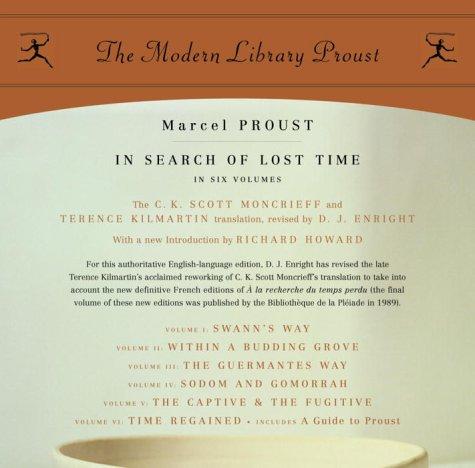
In Search of Lost Time is a seven-volume novel published between 1913 and 1927 in which the unnamed narrator, looking back from late middle age, attempts to recover a life that has slipped away.
Marcel Proust · 1913 · 100h 0m
Full summary and key takeaways →The 12 questions
- 1.
The madeleine moment is probably the most famous scene in all of European literature. Did it land for you as written, or does the reputation make it hard to encounter freshly?
- 2.
Proust's narrator is not always a reliable or sympathetic figure — his treatment of Albertine in particular can be suffocating and controlling. How much does that affect your engagement with the novel?
- 3.
The comedy in Proust is often overlooked. Which social portrait struck you as the sharpest — Charlus, the Verdurins, the Guermantes family?
- 4.
The novel argues that we never really know the people we love — we know our idea of them. Do you think that's a tragic observation or simply an accurate one?
- 5.
How does the experience of reading Proust over a long period of time — weeks or months — change the way the novel works? Does it feel different to have time pass while you're inside a book about time passing?
- 6.
Swann in Love, embedded in the first volume, is often read as a standalone story. How does knowing Swann's fate change how you read his earlier obsession with Odette?
- 7.
The narrator's relationship to class and money is complicated — he critiques the aristocracy but is also fascinated by it. Is that tension resolved by the end, or is it left open?
- 8.
Proust said he was less interested in describing a world than in discovering a law. What law do you think In Search of Lost Time has discovered?
- 9.
The prose demands submission — you can't skim it and get anything. How did you experience the actual reading process, physically and emotionally?
- 10.
The novel ends with a decision to write. Does that ending feel earned, given everything the narrator has been through, or does it arrive too neatly?
- 11.
Compared to other books about memory — say, Speak, Memory or The Year of Magical Thinking — where does Proust land harder? Where does he fall short?
- 12.
The novel is set in a world that was already disappearing as it was written — the Belle Époque erased by the First World War. Does that historical layer change how you read it?
How to run the discussion
- Pick six to eight, not all of them. An hour of real discussion covers fewer questions than anyone expects, and racing the list is what makes a book club feel like homework.
- Open with what people noticed, not what they concluded. Asking for a verdict first hardens opinions before anyone has heard each other.
- Let the disagreement run. The questions below that split a room are the ones worth the time; the ones everyone answers the same way can be skipped.
- Ask the quiet person a specific question. A direct, narrow question is far easier to answer than an open invitation to contribute.
Themes worth steering toward
If the conversation stalls, these are the threads that usually restart it.
Common questions
What are good book club questions for In Search of Lost Time?
Here are 12 book club questions for In Search of Lost Time by Marcel Proust, ordered to open easily and end somewhere worth arguing about. The strongest openers ask what each reader noticed rather than what they concluded, and the discussion usually turns on memory, time and loss, identity.
How long should a book club discussion of In Search of Lost Time last?
Most groups run 60 to 90 minutes of actual discussion. That is roughly six to eight questions, not all of them, so pick the ones that suit your group rather than working down the list in order.
What are the main themes in In Search of Lost Time?
Memory, Time and loss, Identity, Art and creation, Social class. Those are the threads most likely to divide a room, which makes them the useful places to steer a discussion that has gone quiet.
Picking the next one? See books like In Search of Lost Time or questions for other book club picks.
