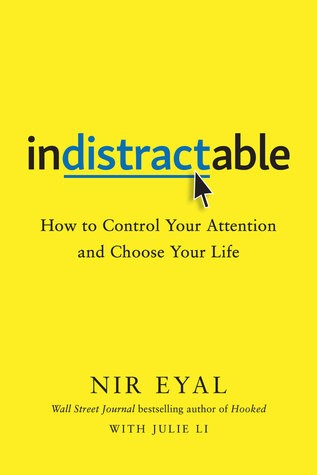
Talk to Indistractable: How to Control Your Attention and Choose Your Life like its author wrote you back.
Get the ideas that fit your life — not generic summaries.
- Chat with the book
- Audiobook-style main ideas
- Adapts to your life and goals
- Helps you take action
What it argues
Indistractable is Nir Eyal's argument that distraction is not a technology problem — it's a psychology problem. Most people blame their phones, apps, or open-plan offices for their inability to concentrate, but Eyal's claim is that external triggers are the secondary cause. The primary cause is internal: the discomfort people are trying to escape. Boredom, anxiety, self-doubt, and loneliness all drive people toward the nearest distraction. Until that root cause is addressed, blocking apps and deleting social media accounts will only produce short-term relief.
The book is structured around four main levers. First, manage the internal triggers that drive distraction: learn to observe discomfort rather than act on it immediately, and use techniques like surfing the urge or reimagining the task. Second, make time for traction by scheduling every hour with intention rather than reacting to whatever arrives. Eyal calls this "timeboxing" and treats it as non-negotiable. Third, hack back external triggers by auditing every notification, email cue, and meeting invitation that hijacks attention — most of them are removable. Fourth, prevent distraction with pacts: commitment devices that raise the cost of straying from what you said you would do.
What it gets right
- 1.
Distraction is not caused by external triggers alone. The real driver is internal discomfort — boredom, anxiety, or loneliness — that people escape by reaching for the nearest distraction.
- 2.
The opposite of distraction is not focus. It's traction. Any action that moves you toward your intention counts as traction, whether that's working or intentionally resting.
- 3.
Timeboxing every hour of the day is Eyal's core productivity tool. If it's not on the calendar with a specific purpose, external demands will fill it.
What it covers
Who wrote it
Nir Eyal is an author and lecturer who teaches at Stanford's Graduate School of Business. His first book, Hooked: How to Build Habit-Forming Products (2014), became a standard reference for product designers and behavioral economists. Eyal spent years researching the psychology of persuasive technology and noticed that the same mechanisms he described in Hooked were undermining the autonomy of the people he most wanted to help — which led directly to Indistractable. He writes at nirandfar.com and has contributed to Harvard Business Review and Psychology Today.
