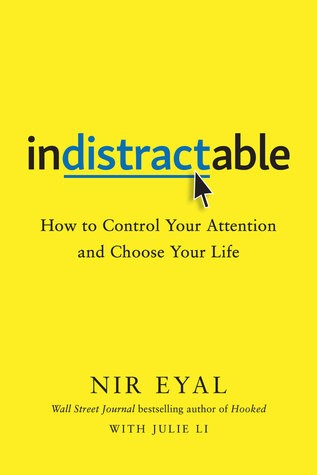
Indistractable: How to Control Your Attention and Choose Your Life by Nir Eyal is a 2019 self-help book about distraction, attention, focus. Distraction is not caused by external triggers alone. The real driver is internal discomfort — boredom, anxiety, or loneliness — that people escape by reaching for the nearest distraction.
Summary
Indistractable is Nir Eyal's argument that distraction is not a technology problem — it's a psychology problem. Most people blame their phones, apps, or open-plan offices for their inability to concentrate, but Eyal's claim is that external triggers are the secondary cause. The primary cause is internal: the discomfort people are trying to escape. Boredom, anxiety, self-doubt, and loneliness all drive people toward the nearest distraction. Until that root cause is addressed, blocking apps and deleting social media accounts will only produce short-term relief.
The book is structured around four main levers. First, manage the internal triggers that drive distraction: learn to observe discomfort rather than act on it immediately, and use techniques like surfing the urge or reimagining the task. Second, make time for traction by scheduling every hour with intention rather than reacting to whatever arrives. Eyal calls this "timeboxing" and treats it as non-negotiable. Third, hack back external triggers by auditing every notification, email cue, and meeting invitation that hijacks attention — most of them are removable. Fourth, prevent distraction with pacts: commitment devices that raise the cost of straying from what you said you would do.
The book makes a point of distinguishing distraction from rest. Deliberately browsing something entertaining after a hard hour of work is not distraction — it's traction on the goal of recovery. Eyal's framework is about living intentionally, not about squeezing out every idle moment. He also addresses the particular challenges of raising children in a screen-saturated environment and building teams where distraction-free work is structurally possible rather than left to individual willpower.
What separates Indistractable from generic productivity advice is Eyal's willingness to locate the problem inside the person rather than in the phone. The same instinct that drove him to write Hooked — a manual for building habit-forming products — led him to notice that the people most vulnerable to those products were running from something. The book is more honest than most self-help about the emotional underpinnings of compulsive behavior, and more practical than most psychology writing about what to do on Monday morning.
Talk to Indistractable: How to Control Your Attention and Choose Your Life like its author wrote you back.
Get the ideas that fit your life — not generic summaries.
- Chat with the book
- Audiobook-style main ideas
- Adapts to your life and goals
- Helps you take action
Key takeaways
- 1.
Distraction is not caused by external triggers alone. The real driver is internal discomfort — boredom, anxiety, or loneliness — that people escape by reaching for the nearest distraction.
- 2.
The opposite of distraction is not focus. It's traction. Any action that moves you toward your intention counts as traction, whether that's working or intentionally resting.
- 3.
Timeboxing every hour of the day is Eyal's core productivity tool. If it's not on the calendar with a specific purpose, external demands will fill it.
- 4.
Managing internal triggers means learning to observe discomfort without immediately acting on it. Techniques like 'surfing the urge' create a pause between the feeling and the escape behavior.
- 5.
External triggers — notifications, pings, drop-in visitors — should be audited ruthlessly. Most can be turned off or restructured without meaningful cost.
- 6.
Precommitment pacts raise the cost of distraction. Price pacts (paying money if you stray), effort pacts (adding friction), and identity pacts (defining yourself as indistractable) all work through different mechanisms.
- 7.
Children's distraction often reflects unmet psychological needs: autonomy, competence, and relatedness. Restricting devices without addressing those needs rarely works long-term.
- 8.
Workplace distraction is often a symptom of organizational dysfunction. If open-plan offices and always-on Slack are the default, individual effort alone cannot compensate.
Discussion questions
Use these on your own, with a book club, or as chat starters in Superbook. Book club version, ready to copy or print →
- 1.
Eyal argues distraction is driven by internal discomfort before it's driven by external triggers. What feeling do you most often try to escape when you reach for your phone?
- 2.
What does your calendar look like compared to how you actually spent last week? Where did the unscheduled hours go?
- 3.
Pick one recurring distraction in your life. Is it pulling you away from something genuinely hard, or from something that could be redesigned to be less unpleasant?
- 4.
Eyal distinguishes traction from distraction by asking whether an action aligns with your intentions. How often do you act with a clear prior intention rather than react to what arrives?
- 5.
Timeboxing treats every hour as a deliberate choice. What would you put on your calendar that currently gets squeezed out by reactive demands?
- 6.
Which external triggers in your daily environment could you remove, silence, or restructure without meaningful cost? What stops you from doing it today?
- 7.
Eyal wrote Hooked as a guide to building habit-forming products, then wrote this book warning people about those products. Does knowing the mechanics of persuasive design change how you respond to it?
- 8.
The book says identity — calling yourself 'indistractable' — changes behavior. Is there a behavior you've actually changed by changing how you describe yourself?
- 9.
What is the most effective precommitment device you've ever used, intentionally or accidentally? What made it work?
- 10.
Eyal argues that children need autonomy, competence, and relatedness met before screen limits make sense. Does that reframe any concern you have about a child's technology use?
- 11.
When was the last time you were bored — genuinely bored, without reaching for anything — and what happened? What does the answer reveal about your relationship with discomfort?
- 12.
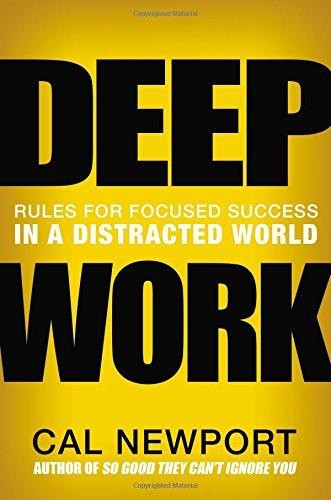
Newport's Deep Work and Eyal's Indistractable offer overlapping prescriptions but start from different diagnoses. Which framing fits your situation better: Newport's (the world rewards focus) or Eyal's (you're running from discomfort)?
Themes
Frequently asked questions
-
What is Indistractable about?
Indistractable argues that distraction is primarily an internal problem driven by emotional discomfort, not an external one caused by smartphones or apps. Eyal offers a four-part framework: manage internal triggers, schedule time with intention, eliminate unnecessary external triggers, and use precommitment devices to hold yourself accountable.
-
How long does it take to read Indistractable?
Around four to four and a half hours at average reading pace for the 260-page book. Chapters are short and each ends with a summary, so it works well in short reading sessions with time to experiment between them.
-
Is Indistractable worth reading if I've already read Deep Work?
Yes, though they're different books. Deep Work makes the case that focused work is valuable and gives scheduling strategies. Indistractable starts earlier in the chain and asks why people fail to focus in the first place. If you've read Newport and still find yourself checking your phone anyway, Eyal's psychological framing may be more useful.
-
Who should read Indistractable?
People who know what they should be doing but consistently get pulled away from it. It's also well suited to parents navigating children's screen use, and to managers trying to build team cultures where sustained attention is possible rather than heroic.
-
What's the most actionable idea in Indistractable?
Timeboxing: scheduling every hour of the day before the day begins, with a specific intention for each block. It shifts you from reacting to whatever arrives to defending time you've already allocated. Combined with turning off non-essential notifications, most readers report an immediate reduction in reactive distraction.