Business · Book club
Innovation and Entrepreneurship book club questions
Here are 12 book club questions for Innovation and Entrepreneurship by Peter F. Drucker, ordered to open easily and end somewhere worth arguing about. Copy them, print them, or bring them up one at a time.
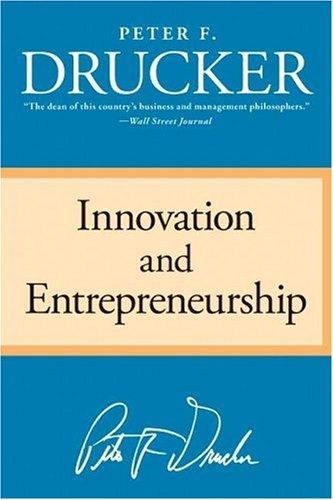
Innovation and Entrepreneurship is Drucker's systematic treatment of a subject that, in 1985, most people still regarded as the province of lone geniuses and lucky accidents.
Peter F. Drucker · 1985 · 5h 45m
Full summary and key takeaways →The 12 questions
- 1.
Drucker lists seven sources of innovative opportunity. Which of those sources does your organization or industry most consistently overlook?
- 2.
Think of an unexpected success in your own work or company. Was it recognized as an opportunity or dismissed as a fluke?
- 3.
Where in your industry do you see an incongruity — a mismatch between what the market needs and what existing products deliver?
- 4.
Drucker argues that demographic data is one of the most reliable indicators of future opportunity. What demographic shifts are already underway in your market that haven't yet been fully exploited?
- 5.
He distinguishes between improving a process and innovating one. When does incremental improvement become a substitute for real change that users actually need?
- 6.
What would it look like in practice to separate an entrepreneurial unit from the demands of an established operation in your organization?
- 7.
Drucker insists that innovation must be managed rather than inspired. Does that view undervalue something important, or is it simply honest about how most durable innovations actually happen?
- 8.
Which of his four entrepreneurial strategies — fastest to market, creative imitation, ecological niche, or changing value — do you see applied most often in your industry?
- 9.
He warns that many innovations fail not because of the idea but because of the management structure around it. Can you name an example you've seen?
- 10.
What would change about your organization's culture if systematic opportunity scanning were a regular management practice rather than an occasional exercise?
- 11.
Drucker wrote this in 1985. Which of his frameworks feel most dated in a digital context, and which translate cleanly?
- 12.
He argues that the entrepreneur shifts resources from areas of low productivity to areas of high opportunity. What resources in your organization are trapped in low-productivity activities?
How to run the discussion
- Pick six to eight, not all of them. An hour of real discussion covers fewer questions than anyone expects, and racing the list is what makes a book club feel like homework.
- Open with what people noticed, not what they concluded. Asking for a verdict first hardens opinions before anyone has heard each other.
- Let the disagreement run. The questions below that split a room are the ones worth the time; the ones everyone answers the same way can be skipped.
- Ask the quiet person a specific question. A direct, narrow question is far easier to answer than an open invitation to contribute.
Themes worth steering toward
If the conversation stalls, these are the threads that usually restart it.
Common questions
What are good book club questions for Innovation and Entrepreneurship?
Here are 12 book club questions for Innovation and Entrepreneurship by Peter F. Drucker, ordered to open easily and end somewhere worth arguing about. The strongest openers ask what each reader noticed rather than what they concluded, and the discussion usually turns on innovation, entrepreneurship, strategy.
How long should a book club discussion of Innovation and Entrepreneurship last?
Most groups run 60 to 90 minutes of actual discussion. That is roughly six to eight questions, not all of them, so pick the ones that suit your group rather than working down the list in order.
What are the main themes in Innovation and Entrepreneurship?
Innovation, Entrepreneurship, Strategy, Opportunity, Management. Those are the threads most likely to divide a room, which makes them the useful places to steer a discussion that has gone quiet.
Picking the next one? See books like Innovation and Entrepreneurship or questions for other book club picks.
