Philosophy · Book club
Interaction of Color book club questions
Here are 11 book club questions for Interaction of Color by Josef Albers, ordered to open easily and end somewhere worth arguing about. Copy them, print them, or bring them up one at a time.
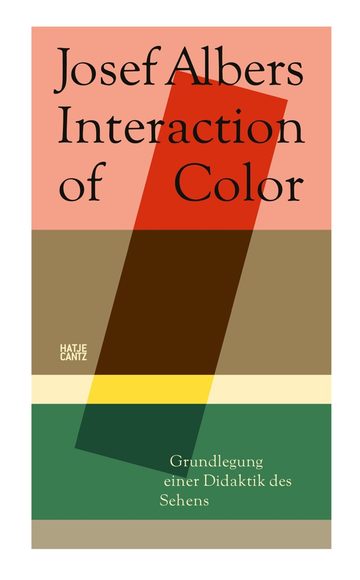
Josef Albers published Interaction of Color in 1963 as a teaching instrument, not a textbook.
Josef Albers · 1963 · 2h 0m
Full summary and key takeaways →The 11 questions
- 1.
Albers argues that our eyes are trained to see incorrectly from birth. Do you think that's fixable, or is the gap between physical color and perceived color something designers simply have to work with?
- 2.
The book's authority depends on physical color samples. How much does the medium — screen, print, physical paper — affect how you receive its argument?
- 3.
Which of the interaction effects Albers describes do you notice most often in everyday environments: interiors, clothing, packaging?
- 4.
Albers separates color perception from color symbolism entirely. Is that separation intellectually honest, or does it leave out something important about how color actually works in culture?
- 5.
The method Albers teaches is slow and studio-based. How would you adapt it for a professional context where decisions happen quickly?
- 6.
If you've spent time as a practitioner — designer, painter, photographer — do you recognize Albers's descriptions in your own practice, or does his account miss something?
- 7.
The book was originally published as a limited-edition folio. What does it mean for a book about visual perception to be reproduced in formats that compromise its demonstrations?
- 8.
Albers trained generations of artists and designers at Yale. What do you think his students lost that can't be gotten from reading the book alone?
- 9.
Albers is descriptive rather than prescriptive: he describes how color behaves but doesn't tell you what to do with that knowledge. Is that a strength or a limitation?
- 10.
Are there areas outside visual art where Albers's core insight — that things appear differently depending on context — applies equally well?
- 11.
The book says almost nothing about why we respond emotionally to color. Does that gap feel significant to you, or does Albers's narrower focus make his argument stronger?
How to run the discussion
- Pick six to eight, not all of them. An hour of real discussion covers fewer questions than anyone expects, and racing the list is what makes a book club feel like homework.
- Open with what people noticed, not what they concluded. Asking for a verdict first hardens opinions before anyone has heard each other.
- Let the disagreement run. The questions below that split a room are the ones worth the time; the ones everyone answers the same way can be skipped.
- Ask the quiet person a specific question. A direct, narrow question is far easier to answer than an open invitation to contribute.
Themes worth steering toward
If the conversation stalls, these are the threads that usually restart it.
Common questions
What are good book club questions for Interaction of Color?
Here are 11 book club questions for Interaction of Color by Josef Albers, ordered to open easily and end somewhere worth arguing about. The strongest openers ask what each reader noticed rather than what they concluded, and the discussion usually turns on color perception, visual art, perception.
How long should a book club discussion of Interaction of Color last?
Most groups run 60 to 90 minutes of actual discussion. That is roughly six to eight questions, not all of them, so pick the ones that suit your group rather than working down the list in order.
What are the main themes in Interaction of Color?
Color perception, Visual art, Perception, Design education, Relativity. Those are the threads most likely to divide a room, which makes them the useful places to steer a discussion that has gone quiet.
Picking the next one? See books like Interaction of Color or questions for other book club picks.
