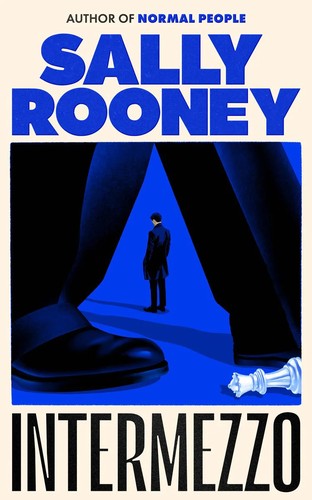
Talk to Intermezzo like its author wrote you back.
Get the ideas that fit your life — not generic summaries.
- Chat with the book
- Audiobook-style main ideas
- Adapts to your life and goals
- Helps you take action
Intermezzo, in detail
Intermezzo is Sally Rooney's fourth novel, following two brothers in Dublin in the months after their father's death. Peter Korellis is a thirty-two-year-old barrister who has never recovered from a breakup with his college girlfriend Sylvia, now his closest friend and still partially his lover, while also sleeping with and falling in love with Naomi, a twenty-three-year-old in a difficult situation. Ivan Korellis is twenty-two, a chess prodigy who begins a relationship with Margaret, a thirty-six-year-old woman recently widowed, that neither of them knows how to categorize. The novel alternates between the brothers with different narrative techniques and watches both relationships form, falter, and press against the question of what people owe each other.
The title is a chess term — the intermezzo or zwischenzug, an in-between move that disrupts an expected sequence. Rooney uses it to describe the moment the novel occupies: between a death and whatever comes after it, between one kind of life and the next. Grief is not the book's explicit subject but it saturates everything — the brothers' inability to speak to each other, Peter's drug use, Ivan's sudden willingness to risk something real. Both men are trying to feel something that doesn't hurt.
Rooney's style has evolved. The Peter sections use long, stream-of-consciousness sentences and avoid quotation marks, giving his interiority an anxious, unbroken quality. The Ivan sections are more traditionally rendered, quieter, and let the chess scenes carry a surprising amount of emotional freight. The contrast in technique is deliberate and reflects the two men's different relationships to their own minds.
This is Rooney's most emotionally ambitious novel and probably her most divisive. Readers who found Normal People or Beautiful World, Where Are You too schematic or too sociologically tidy will find Intermezzo less neat — the moral questions are genuinely unresolved and the characters are harder to map onto positions. Those looking for the precise social observation of her earlier work will find it, but freighted with more grief than before.
The big ideas
- 1.
The novel uses alternating styles — stream-of-consciousness for Peter, more contained third-person for Ivan — as a formal argument about how differently siblings can experience the same loss.
- 2.
Rooney treats age-gap relationships not as scandals to be adjudicated but as relationships with their own specific difficulties, which she examines without editorial comment.
- 3.
Grief in the novel operates structurally: the brothers can't communicate because grief has disrupted the usual circuits, and the novel watches them trying to reroute.
