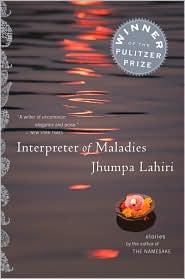
Talk to Interpreter of Maladies like its author wrote you back.
Get the ideas that fit your life — not generic summaries.
- Chat with the book
- Audiobook-style main ideas
- Adapts to your life and goals
- Helps you take action
What it argues
Interpreter of Maladies is Jhumpa Lahiri's debut short story collection, winner of the 1999 Pulitzer Prize for Fiction. The nine stories are set in India and in the Indian immigrant communities of the American Northeast, and they circle the same cluster of concerns from different angles: the difficulties of living in a culture not quite your own, the loneliness of marriage, the ways people fail to communicate what matters most to them, and what gets lost in transit between generations and continents.
The collection is dominated by images of people who cannot or will not speak about what is actually happening to them. In the title story, an Indian-American tourist family visits their ancestral homeland and the wife confides a devastating secret to a tour guide she will never see again, precisely because he is a stranger. In "A Temporary Matter," a couple drifting apart has their best conversation under cover of a nightly blackout, in the dark, when they can't see each other's faces. In "When Mr. Pirzada Came to Dine," a child registers a war through an adult's inexplicable anxiety, understanding it only later. Lahiri is a writer of tremendous restraint; the silences in these stories carry as much weight as the speech.
What it gets right
- 1.
Lahiri's stories are unified by the theme of untransmittable experience — things that cannot be communicated across cultures, generations, marriages, because the gap between people is finally unbridgeable.
- 2.
Restraint is the collection's dominant mode: Lahiri trusts the reader to feel what she doesn't name, and the stories that work best are the ones where the most important things are never said.
- 3.
The title story establishes the collection's central metaphor: the interpreter who translates symptoms but cannot translate the actual suffering — a condition Lahiri extends to all her characters.
What it covers
Who wrote it
Jhumpa Lahiri was born in London in 1967 to Bengali parents and grew up in Rhode Island. She received her BA from Barnard College and three graduate degrees from Boston University. Interpreter of Maladies (1999), her debut collection, won the Pulitzer Prize for Fiction in 2000. Her debut novel, The Namesake (2003), was adapted into a film by Mira Nair in 2006. She has published two subsequent short story collections, Unaccustomed Earth (2008) and Roman Stories (2023), and a memoir written in Italian, In Other Words (2015). She is a professor at Princeton and splits her time between Rome and the United States.
