Interpreter of Maladies by Jhumpa Lahiri is a 1999 short stories book about displacement and belonging, communication and its failures, marriage and loneliness. Lahiri's stories are unified by the theme of untransmittable experience — things that cannot be communicated across cultures, generations, marriages, because the gap between people is finally unbridgeable.
Summary
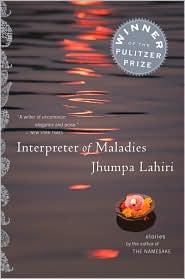
Interpreter of Maladies is Jhumpa Lahiri's debut short story collection, winner of the 1999 Pulitzer Prize for Fiction. The nine stories are set in India and in the Indian immigrant communities of the American Northeast, and they circle the same cluster of concerns from different angles: the difficulties of living in a culture not quite your own, the loneliness of marriage, the ways people fail to communicate what matters most to them, and what gets lost in transit between generations and continents.
The collection is dominated by images of people who cannot or will not speak about what is actually happening to them. In the title story, an Indian-American tourist family visits their ancestral homeland and the wife confides a devastating secret to a tour guide she will never see again, precisely because he is a stranger. In "A Temporary Matter," a couple drifting apart has their best conversation under cover of a nightly blackout, in the dark, when they can't see each other's faces. In "When Mr. Pirzada Came to Dine," a child registers a war through an adult's inexplicable anxiety, understanding it only later. Lahiri is a writer of tremendous restraint; the silences in these stories carry as much weight as the speech.
The prose is clean without being cold. Lahiri writes with precision about domestic life — meals, routines, the objects in a house, the small rituals that constitute a marriage or a childhood — and uses this specificity to establish the weight of ordinary life before she disrupts it. The disruptions are rarely dramatic; no one shoots anyone or falls from a great height. The quiet devastations are the point.
This is one of the most consistently excellent debut short story collections in American literature, and its brevity makes it accessible even to readers who don't usually read short fiction. Comparable to Alice Munro in her interest in the compression of lives into small moments, and to Raymond Carver in the register of quiet failure, though warmer and more specific about culture and place than either. The collection has dated slightly in that Indian-American experience has been much more fully represented in fiction since 1999, but Lahiri's technical control remains a model for the form.
Talk to Interpreter of Maladies like its author wrote you back.
Get the ideas that fit your life — not generic summaries.
- Chat with the book
- Audiobook-style main ideas
- Adapts to your life and goals
- Helps you take action
Key takeaways
- 1.
Lahiri's stories are unified by the theme of untransmittable experience — things that cannot be communicated across cultures, generations, marriages, because the gap between people is finally unbridgeable.
- 2.
Restraint is the collection's dominant mode: Lahiri trusts the reader to feel what she doesn't name, and the stories that work best are the ones where the most important things are never said.
- 3.
The title story establishes the collection's central metaphor: the interpreter who translates symptoms but cannot translate the actual suffering — a condition Lahiri extends to all her characters.
- 4.
Indian immigrant characters in the collection are not defined primarily by their immigration; they are defined by their specific individual relationships to the same human experiences that define everyone.
- 5.
Second-generation characters — the children born in America — face a different kind of displacement than their parents: they are asked to be the bridge between two worlds and find the weight of that role quietly unbearable.
- 6.
Marriage in the collection is repeatedly depicted as a site of mutual incomprehension rather than connection — the people most intimate with us are often the ones we communicate with least.
- 7.
Grief in these stories is handled obliquely: characters mourn things they can barely name, and the reader is left to infer the full weight of what has been lost.
- 8.
The collection's geographic movement between India and America is not a source of exotic contrast but a way of asking the same questions about human distance in different registers.
Discussion questions
Use these on your own, with a book club, or as chat starters in Superbook. Book club version, ready to copy or print →
- 1.
In the title story, Mrs. Das confesses to the tour guide Mr. Kapasi something she has never told her husband. What does the story suggest about why it is easier to be honest with a stranger than with the person you have chosen to live with?
- 2.
Mr. Kapasi's fantasy about his correspondence with Mrs. Das is one of the most quietly devastating moments in the collection. What does his fantasy reveal about his own marriage and his own longing?
- 3.
In 'A Temporary Matter,' the couple's nighttime conversations are made possible by darkness and the knowledge that the power will come back on. Does the story suggest that this kind of conditional honesty is still valuable, or that it makes the subsequent silence worse?
- 4.
The child narrator of 'When Mr. Pirzada Came to Dine' understands what is happening only partially. How does Lahiri use the gap between what the child registers and what she can't yet understand?
- 5.
Lahiri has described herself as feeling neither fully American nor fully Indian. Do her characters feel that ambivalence, or is it different for each of them?
- 6.
Marriage in the collection is nearly always depicted as a site of loneliness rather than connection. Is this a dark vision of marriage specifically or a dark vision of human intimacy generally?
- 7.
Which story in the collection worked least well for you? Why? Does the collection hold together as a single work, or do the weaker stories dilute it?
- 8.
Lahiri won the Pulitzer with a debut collection at twenty-two. Some critics suggested the prize was partly recognition of the subject matter — representing an underrepresented immigrant experience — rather than purely literary. Do you think that's fair? Does it change how you read the stories?
- 9.
Compare Lahiri's restraint to another short story writer you admire. What does her approach to what is not said allow her to do that a more explicit approach wouldn't?
- 10.
The collection was published in 1999. Does it feel dated now that Indian-American experience is much more widely represented in American fiction? Or has it aged well?
- 11.
In 'The Third and Final Continent,' the narrator's relationship with his elderly landlady Mrs. Croft is one of the collection's most unexpected emotional centers. Why does this relationship feel significant, and what does it have to do with the rest of the collection's themes?
- 12.
If you could add a story to this collection, what would it be about? What does Lahiri leave unexplored that the collection seems to circle around?
Themes
Frequently asked questions
-
Is Interpreter of Maladies worth reading?
Yes. It is one of the best short story collections of the past thirty years — technically masterful, emotionally precise, and remarkably consistent across nine stories. The Pulitzer was well-earned. Even readers who don't usually like short fiction tend to find it absorbing.
-
Do the stories connect to each other, or is it a collection of unrelated pieces?
They share themes and concerns rather than characters or plot. The stories don't need to be read in order, but reading them sequentially builds a cumulative sense of the collection's preoccupations in a way that feels like a unified work.
-
How long does it take to read Interpreter of Maladies?
Around four hours for the full collection. Individual stories run fifteen to forty pages. It works well as something to read in one or two sittings or over a week with one story per night.
-
Is this collection appropriate for a book club?
Excellent for book clubs. The stories are accessible, the questions they raise are genuinely open, and the discussion of which story worked best and why tends to generate real disagreement. Having everyone read the same two or three stories in depth is often better than assigning the whole collection.
-
Who shouldn't read this collection?
Readers who find stories about quiet domestic failure depressing without redemption. Lahiri's emotional register is restrained to the point that some readers find it cold. If you need your fiction to be loud, this collection will frustrate you.
Similar books

Born a Crime: Stories from a South African Childhood
Trevor Noah
The Woman Warrior: Memoirs of a Girlhood Among Ghosts
Maxine Hong Kingston

Angela's Ashes
Frank McCourt
Between the World and Me
Ta-Nehisi Coates
