Talk to Into the Water like its author wrote you back.
Get the ideas that fit your life — not generic summaries.
- Chat with the book
- Audiobook-style main ideas
- Adapts to your life and goals
- Helps you take action
What it argues
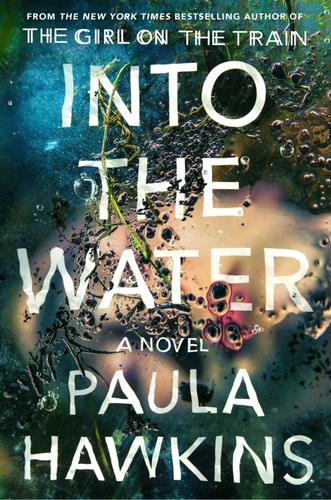
In a small English town, women have been dying in a river pool called the Drowning Pool for centuries. The latest is Nel Abbott, apparently fallen or jumped from a cliff above the water. Her estranged sister Jules arrives to care for Nel's teenage daughter Lena, who is grieving and hostile and may know more than she's saying. The investigation involves a cast of interconnected townspeople — a detective with his own history with the pool, the parents of a schoolgirl who died there earlier that year — all narrated in rotating close third-person perspectives.
Into the Water is Hawkins' follow-up to The Girl on the Train, and it's a more ambitious and more flawed book. The ambition is the multi-narrator structure — there are more than ten distinct perspectives — and the attempt to braid a contemporary mystery with the historical mythology of women drowned as witches or dangerous wives. The flaw is that with this many voices, none of them quite lands as deeply as Rachel did in the previous book. The novel asks for investment in a dozen characters simultaneously and achieves it with only a few of them.
What it gets right
- 1.
The Drowning Pool's historical function — a place where inconvenient women were disposed of under various pretexts across centuries — is the novel's central metaphor and its most resonant element.
- 2.
Nel's manuscript about the pool women runs as a counterpoint to the investigation. Her research was getting somewhere before she died.
- 3.
The multi-narrator structure serves the book's argument — that community silence requires everyone's participation — but it disperses the emotional investment.
What it covers
Who wrote it
Paula Hawkins is a British author and former journalist based in London. She worked as a financial journalist before writing fiction. The Girl on the Train was her debut thriller, published in 2015, and became one of the fastest-selling adult novels in publishing history, spending 23 weeks on the New York Times bestseller list. It was adapted into a 2016 film starring Emily Blunt. Her follow-up novel Into the Water was published in 2017. Both books explore psychological suspense with female narrators whose reliability is central to the reading experience.
