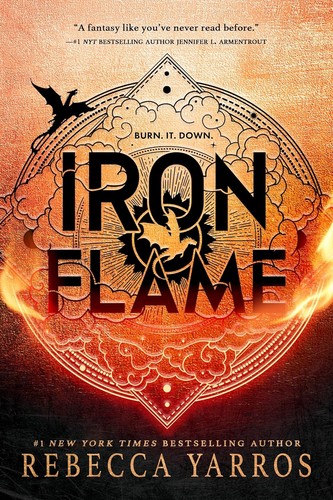
Talk to Iron Flame like its author wrote you back.
Get the ideas that fit your life — not generic summaries.
- Chat with the book
- Audiobook-style main ideas
- Adapts to your life and goals
- Helps you take action
Iron Flame, in detail
Iron Flame picks up in the immediate aftermath of Fourth Wing's reveal, with Violet Sorrengail now knowing what the war is actually about and what her mother has been hiding. The second year at Basgiath War College begins with everything structurally changed: the alliances that made the first year navigable are destabilized, the lies the institution has built itself on are cracking, and Violet's relationship with Xaden is strained by the magnitude of what was withheld from her. This is the book where the consequences of the first novel's choices arrive.
Yarros is working at a larger scale here — the novel is longer, the geopolitical machinery is more explicit, and the secondary characters get more room. The resistance storyline that was background in Fourth Wing moves to the foreground, raising questions about what obligation looks like when the institution you're inside is fundamentally corrupt. Violet must decide not just whether to trust Xaden but whether the structures she's been trained to defend deserve defending. The romance continues with higher emotional stakes and more explicit conflict; the fantasy plot requires actual strategic thinking.
The book has the structural problem of all second-volume sequels: it must complicate without resolving, develop without concluding, and sustain tension through a story that by design cannot pay off yet. Yarros handles this more successfully than most, largely because the central question — what do you do when the truth is worse than you imagined and the people you love are implicated in it — is genuinely interesting and doesn't require a series conclusion to matter. The prose remains propulsive rather than literary, the pacing is thriller-inflected.
Iron Flame will lose readers who came for the romance and don't want to do the fantasy work, and it will reward readers who sensed the first book's world had more in it than a love story. The ending is again unresolved, again frustrating, again sufficient to send readers immediately to the next book. As fantasy sequels go, it earns its length.
The big ideas
- 1.
The novel extends Fourth Wing's central argument: institutions don't protect their members from the truth because they need those members to function within the lie.
- 2.
Xaden's arc in this volume is about the cost of being a person who carries secrets he believes are protective — and what happens when the person he's protecting rejects that framing.
- 3.
Violet's power continues to develop in ways that exceed the institution's ability to contain or explain her, which becomes its own kind of problem.
