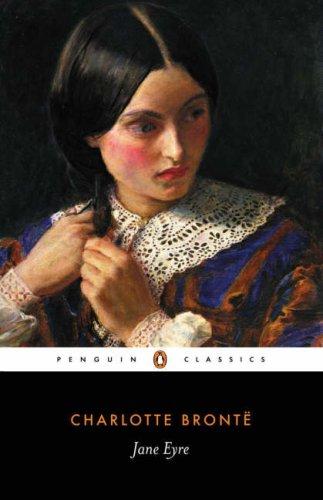
Talk to Jane Eyre like its author wrote you back.
Get the ideas that fit your life — not generic summaries.
- Chat with the book
- Audiobook-style main ideas
- Adapts to your life and goals
- Helps you take action
What it argues
Jane Eyre is the first-person account of a woman who will not be diminished. Born poor, orphaned, and plain, Jane grows up at the mercy of relatives who dislike her and a school whose privations nearly kill her. By the time she arrives at Thornfield Hall as a governess, she has formed a character of unusual integrity — she is neither resigned nor bitter, but she is unyielding about her own worth. Her employer, the brooding, irregular Mr. Rochester, is unlike anyone she has encountered, and the relationship that develops between them is the novel's engine.
Jane Eyre operates in multiple registers simultaneously: gothic thriller, bildungsroman, religious meditation, and love story. The gothic elements (strange laughter in the attic, fires in the night, a ruined landscape) are not decoration — they carry the novel's central secret and its central argument about what gets locked away when a society cannot accommodate inconvenient people. Bertha Mason, Rochester's hidden first wife, is the most written-about figure in the novel who almost never appears. Her presence — the madwoman in the attic, as feminist critics called her — both drives the plot and haunts it. What does it mean that the cost of Rochester and Jane's happiness is her continued imprisonment?
What it gets right
- 1.
Jane's insistence on self-respect, even when it costs her everything she wants, is the novel's moral spine. She refuses Rochester when staying would compromise her integrity.
- 2.
The madwoman in the attic is not just a plot device — Bertha Mason represents everything that doesn't fit the social order, and her fate is the novel's unresolved wound.
- 3.
Class runs through the novel in complex ways: Jane is a gentlewoman by education but economically dependent, which gives her a perspective on social hierarchy that neither the poor nor the wealthy fully share.
What it covers
Who wrote it
Charlotte Brontë (1816–1855) was an English novelist and poet who published Jane Eyre under the pseudonym Currer Bell in 1847. Her other novels include Shirley, Villette, and The Professor. The eldest of three literary sisters (Emily and Anne also published fiction), Charlotte survived all her siblings and achieved significant literary recognition before her death at thirty-eight. Jane Eyre remains her most widely read work and is considered a foundational text of the feminist literary tradition.
