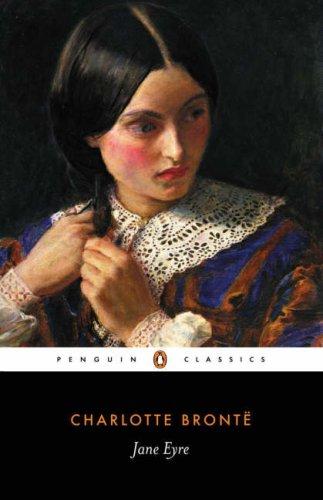
Jane Eyre by Charlotte Brontë is a 1847 classics book about independence and self-worth, class and gender, passion versus morality. Jane's insistence on self-respect, even when it costs her everything she wants, is the novel's moral spine. She refuses Rochester when staying would compromise her integrity.
Summary
Jane Eyre is the first-person account of a woman who will not be diminished. Born poor, orphaned, and plain, Jane grows up at the mercy of relatives who dislike her and a school whose privations nearly kill her. By the time she arrives at Thornfield Hall as a governess, she has formed a character of unusual integrity — she is neither resigned nor bitter, but she is unyielding about her own worth. Her employer, the brooding, irregular Mr. Rochester, is unlike anyone she has encountered, and the relationship that develops between them is the novel's engine.
Jane Eyre operates in multiple registers simultaneously: gothic thriller, bildungsroman, religious meditation, and love story. The gothic elements (strange laughter in the attic, fires in the night, a ruined landscape) are not decoration — they carry the novel's central secret and its central argument about what gets locked away when a society cannot accommodate inconvenient people. Bertha Mason, Rochester's hidden first wife, is the most written-about figure in the novel who almost never appears. Her presence — the madwoman in the attic, as feminist critics called her — both drives the plot and haunts it. What does it mean that the cost of Rochester and Jane's happiness is her continued imprisonment?
Brontë's prose is passionate and unironic in ways that distinguish it sharply from Austen. There are extended passages of explicit interiority where Jane argues with herself about duty, desire, and what she owes herself. The famous line — "I am no bird; and no net ensnares me" — is not unusual; the whole novel is pitched at that level of declarative self-assertion. It should be overwrought, and sometimes it is. But it survives because Jane's voice is so consistent and so convincingly earned.
The novel is not comfortable reading by contemporary standards. The colonial and racial subtext (Bertha's Jamaican Creole heritage) is significant and contested. Rochester is domineering and at times dishonest. The ending requires a kind of Providence that not every reader will find earned. But as a portrait of a woman insisting on her own moral and emotional seriousness, in a century that structured everything against such insistence, Jane Eyre has not been replaced.
Talk to Jane Eyre like its author wrote you back.
Get the ideas that fit your life — not generic summaries.
- Chat with the book
- Audiobook-style main ideas
- Adapts to your life and goals
- Helps you take action
Key takeaways
- 1.
Jane's insistence on self-respect, even when it costs her everything she wants, is the novel's moral spine. She refuses Rochester when staying would compromise her integrity.
- 2.
The madwoman in the attic is not just a plot device — Bertha Mason represents everything that doesn't fit the social order, and her fate is the novel's unresolved wound.
- 3.
Class runs through the novel in complex ways: Jane is a gentlewoman by education but economically dependent, which gives her a perspective on social hierarchy that neither the poor nor the wealthy fully share.
- 4.
The gothic atmosphere — decaying house, hidden secrets, fire — is not backdrop. It is Brontë's method for externalizing psychological and social pressure.
- 5.
Jane's orphanhood is both biographical (Brontë lost her mother young) and structural: it frees the protagonist from family obligations that would otherwise constrain her choices.
- 6.
Rochester's attraction to Jane is partly about her refusal to flatter him. The novel suggests that real intimacy requires equal footing, which is why their relationship is unresolved for so long.
- 7.
The religious debates in the novel — between Jane's morality and St. John Rivers's cold evangelical drive — are not supplementary. They define what kind of life Jane is choosing between.
- 8.
Brontë gives Jane passion and principle simultaneously. Victorian fiction often treated these as alternatives for women. Jane refuses to choose.
Discussion questions
Use these on your own, with a book club, or as chat starters in Superbook. Book club version, ready to copy or print →
- 1.
Jane refuses Rochester when she discovers his deception. St. John Rivers offers her a different kind of life, equally demanding. What is the novel saying by putting these two options against each other?
- 2.
Bertha Mason is locked in an attic, periodically escaping to set fires and attack people. Rochester presents her as a monster. How should we read Bertha, given what we know about how she got there?
- 3.
The novel ends with Rochester blinded and maimed before Jane returns to him. Is that a meaningful punishment, a narrative convenience, or something more ambiguous?
- 4.
Jane consistently asserts her equal worth to those above her in class — Mrs. Reed, Brocklehurst, Rochester. Is this radicalism the novel endorses, or is it complicated by where the story takes her?
- 5.
St. John Rivers is painted as cold and driven. But he wants to devote his life to alleviating poverty overseas. Does the novel judge him fairly?
- 6.
The colonial dimension of Bertha's character — her Jamaican Creole background, her exoticization — has been central to postcolonial criticism of the novel. Does that reading change how you see Brontë's achievement?
- 7.
Jane's childhood at Lowood School is brutal and realistically rendered. How does that early experience shape the adult Jane? Is her adult resilience believable given what she survived?
- 8.
Rochester is controlling, deceptive, and frequently manipulative. Does the novel hold him fully accountable, or does it excuse him because Jane loves him?
- 9.
Compare Jane to the women around her — Blanche Ingram, Miss Temple, Bertha, St. John's sisters. What does each contrast reveal about what Brontë is arguing a woman can or should be?
- 10.
The novel was published in 1847 and was immediately controversial for its defiant heroine. What was so threatening about Jane's attitude, and to whom?
- 11.
Jane's narration is retrospective — she is writing from a position of achieved happiness. Does that framing affect how you read the novel's more desperate middle sections?
- 12.
The novel has two climaxes: the interrupted wedding and the fire at Thornfield. Which is more satisfying narratively, and which is more satisfying morally?
Themes
Frequently asked questions
-
Is Jane Eyre worth reading?
Yes, especially if you want Victorian fiction that doesn't feel like history. Jane's voice is direct, self-aware, and still surprising. The novel has real suspense, a fully rendered love story, and a moral argument that isn't resolved cheaply.
-
Is Jane Eyre hard to read?
Not technically — the language is accessible and the first-person narration is engaging. But it's long, and the religious debates in the middle section slow things down. Some readers find the Gothic elements melodramatic. If you lean into them rather than resisting, they work.
-
What is the madwoman in the attic?
Bertha Mason, Rochester's first wife, whom he keeps locked in the attic of Thornfield Hall. She is the novel's hidden catastrophe and its most complicated figure. Sandra Gilbert and Susan Gubar's 1979 feminist study The Madwoman in the Attic used her as the lens for a major reading of 19th-century women's writing.
-
Why is Jane Eyre considered a classic?
It was the first major English novel to make female psychological and moral experience the center of its argument, not as sentiment but as serious intellectual territory. Jane's insistence on her own worth — plain, poor, and refusing to be diminished — was genuinely radical in 1847 and still reads as vivid.
-
Who shouldn't read Jane Eyre?
Readers who find Gothic atmosphere tedious, or who can't stay with a novel where the emotional pitch stays very high for very long. The novel doesn't modulate much — if the intensity works for you it works completely; if it doesn't, 500 pages is a long time.