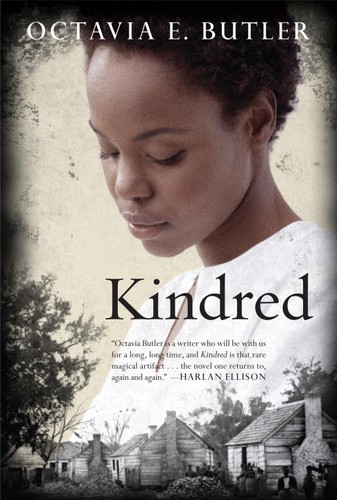
Talk to Kindred like its author wrote you back.
Get the ideas that fit your life — not generic summaries.
- Chat with the book
- Audiobook-style main ideas
- Adapts to your life and goals
- Helps you take action
What it argues
Dana, a Black woman living in California in 1976, is suddenly and involuntarily transported to the antebellum South. The mechanism is not explained — she is simply pulled through time whenever a white boy named Rufus, her ancestor, is in mortal danger, and she is returned to the present only when she herself is near death. Over the course of the novel, Dana makes several trips spanning decades, watching Rufus grow from a child into the slaveholder who will one day father her ancestor — and navigating the full horror of plantation slavery from within it.
Kindred is structured as a survival story, but its real subject is the psychology of slavery — how it was maintained, how it got inside people, how the enslaved found ways to preserve selfhood under conditions designed to obliterate it. Butler is meticulous about the mechanisms: the violence that enforces compliance, the small advantages that create hierarchy among the enslaved, the dependency that develops between enslaved people and the owners they protect to protect themselves. Dana's 1976 consciousness doesn't immunize her from these mechanisms — she finds herself making accommodations she would have found unimaginable, and the novel watches her do it with unflinching honesty.
What it gets right
- 1.
Slavery's durability came not only from violence but from the dependency and attachment it engineered — Butler shows how those bonds developed and why they were so hard to break.
- 2.
Dana's modern consciousness doesn't protect her from the system; within weeks she is making survival accommodations that she would have judged as complicity from the outside.
- 3.
Rufus is neither a simple villain nor a sympathetic figure — he is a product of the system he was born into, and the novel insists on holding both his genuine attachments and his violence simultaneously.
What it covers
Who wrote it
Octavia E. Butler was an American science fiction writer and the first SF author to receive the MacArthur Fellowship, awarded in 1995. Her major works include the Patternist series, the Xenogenesis trilogy, and the Parable series. Butler grew up in Pasadena, California, and spent her career writing about power, race, gender, and survival. She died in 2006. Her work has undergone a significant reassessment since her death and is now widely considered foundational to the genre.
