Talk to Klara and the Sun like its author wrote you back.
Get the ideas that fit your life — not generic summaries.
- Chat with the book
- Audiobook-style main ideas
- Adapts to your life and goals
- Helps you take action
What it argues
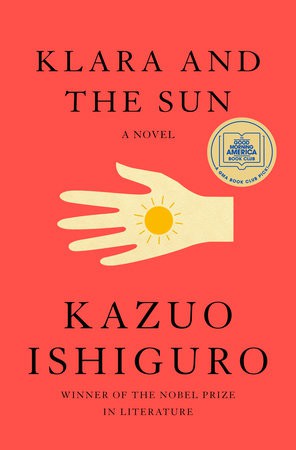
Klara and the Sun is narrated by Klara, an Artificial Friend — a solar-powered robot companion sold to children in a near-future society where genetic enhancement and economic stratification have created a new class system. Klara is perceptive, devoted to the teenager Josie who buys her, and deeply dependent on sunlight in ways that shade into something like faith. The novel is Ishiguro's exploration of consciousness, love, and what we mean when we talk about what makes a person irreplaceable.
The world Ishiguro builds is recognizable but quietly dystopian: children from unenhanced families are excluded from elite institutions and social circles; humans are being displaced from work by automation and accept it with varying degrees of equanimity; the emotional labor of children is outsourced to AFs who are then discarded when the child grows up. Klara notices all of this without quite understanding it, which is the novel's central formal strategy — an observer intelligent enough to describe but not fully equipped to judge.
What it gets right
- 1.
Klara's solar devotion — her quasi-religious relationship with the Sun as a source of life and goodness — is used to examine how consciousness generates meaning-making, sometimes mistakenly.
- 2.
The 'substitution' question at the novel's center is not resolved: Ishiguro presents it as genuinely open and shows that different characters' answers reveal something about how they understand love.
- 3.
Ishiguro uses Klara's limited perspective as a formal device: she sees clearly and judges minimally, which allows the reader to see what the human characters can't or won't.
What it covers
Who wrote it
Kazuo Ishiguro was born in Nagasaki, Japan, and moved to Britain at age five. He is the author of eight novels, including The Remains of the Day, which won the Booker Prize in 1989, and Never Let Me Go, which was shortlisted for the Booker and named one of the best novels of the century by Time magazine. He was awarded the Nobel Prize in Literature in 2017 "who, in novels of great emotional force, has uncovered the abyss beneath our illusory sense of connection with the world." His work characteristically uses restrained, understated prose to explore memory, self-deception, and the weight of the past.
