Talk to Leading like its author wrote you back.
Get the ideas that fit your life — not generic summaries.
- Chat with the book
- Audiobook-style main ideas
- Adapts to your life and goals
- Helps you take action
What it argues
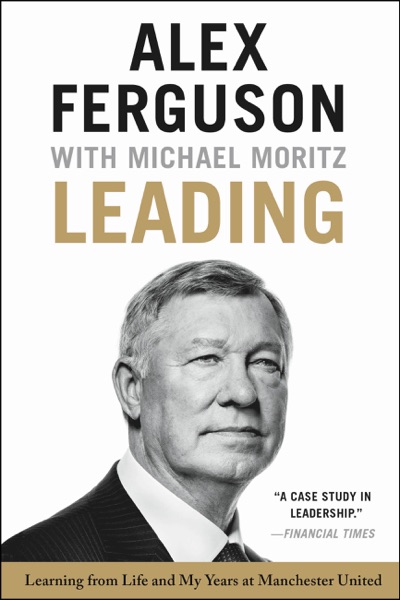
Leading is Sir Alex Ferguson's account of what he learned managing Manchester United for twenty-seven years, written with Silicon Valley investor Michael Moritz. Ferguson won thirteen Premier League titles, five FA Cups, and two Champions League trophies in that tenure — a record of sustained excellence without parallel in elite professional football. The book attempts to systematize what that record required.
Ferguson's central argument is that leadership is not primarily a matter of tactics or technical expertise but of people management: understanding individuals, building relationships, maintaining standards, and preserving the kind of culture in which high performance becomes self-sustaining. He is particularly good on the difficulty of maintaining standards as a team succeeds — the constant pressure to let discipline slip when things are going well, and the need to rebuild teams before they decay rather than after they have already fallen.
What it gets right
- 1.
Winning is a habit that must be constantly renewed. Ferguson's approach to each new season treated the previous success as context, not collateral — the pressure to maintain standards never diminished.
- 2.
Recruit for character first, ability second. Technically exceptional players who erode team culture are more destructive than less talented players who reinforce it.
- 3.
Discipline must be consistent and non-negotiable to be credible. Exceptions made for star players undermine the entire standard.
What it covers
Who wrote it
Sir Alex Ferguson managed Manchester United from 1986 to 2013, winning thirteen Premier League titles, five FA Cups, and two UEFA Champions League trophies. Before United he managed Aberdeen, where he ended the dominance of Celtic and Rangers in Scottish football. He is widely considered the most successful manager in the history of association football. Michael Moritz is a venture capital investor at Sequoia Capital, an early backer of Google and Yahoo, and a former journalist. He and Ferguson co-wrote the book after an extended period of structured interviews.
